October – December
Once you’ve done all your email setup and deliverability housekeeping, it’s time to move on to campaign planning. Again, the real power of email and SMS campaigns is in their potential for personalization. By following the below templates, you can be sure that you’re speaking to each subscriber like you really know them.
When planning your Black Friday campaigns, there are a few best practices to keep in mind:
- Strategically, you want to focus on sending more messages to your most engaged subscribers. This will likely mean you get the most bang for your buck, as these people are the most likely to convert. Plus, they’re the least likely to mark your emails as spam.
- It’s important to experiment with different sending times. Inboxes are crowded during BFCM, so test out different times to try to understand what works for your subscribers.
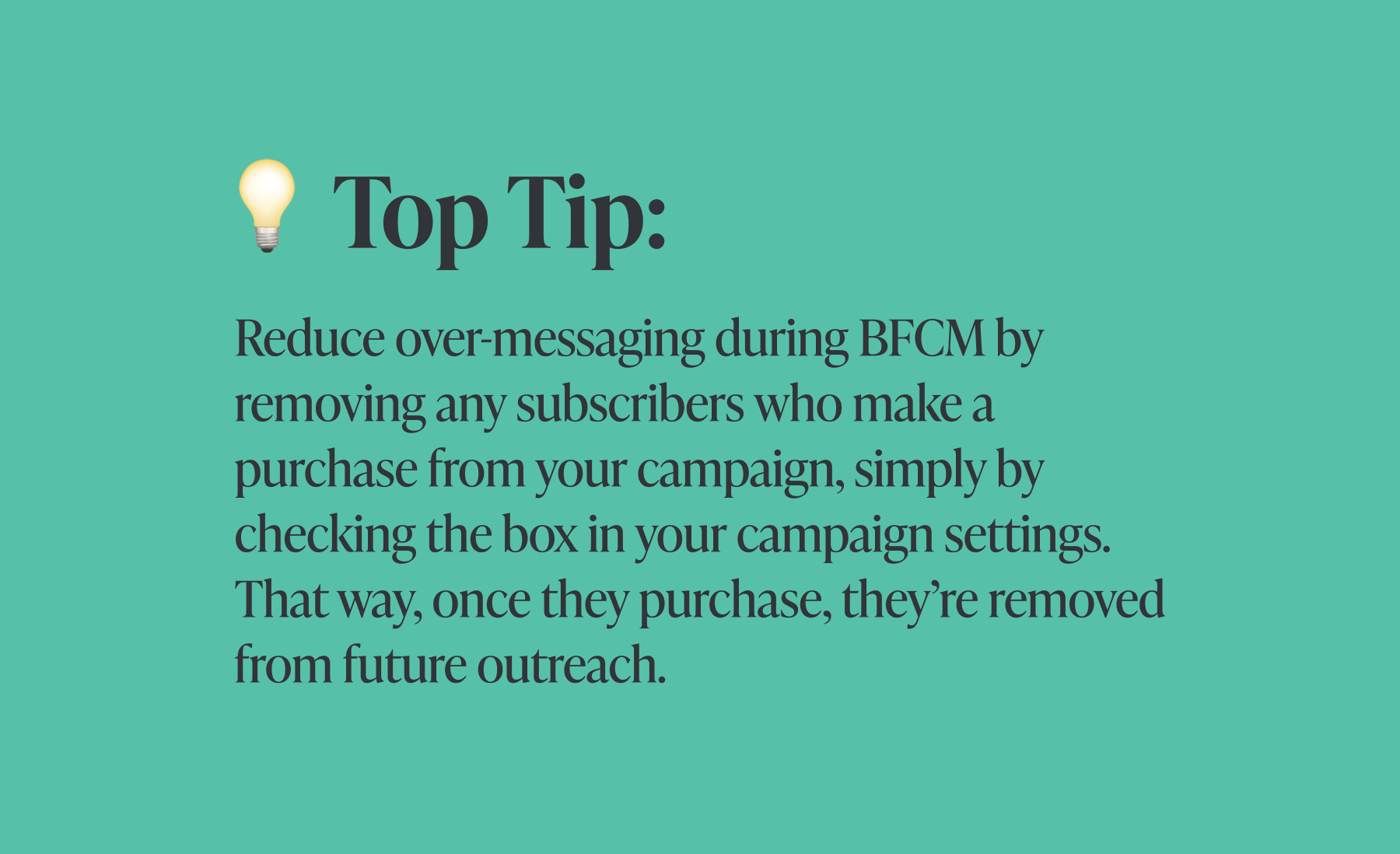
- Try and avoid emailing people who have already purchased from you during BFCM. Depending on your email provider, you may have the ability to “Exclude Purchasers” in settings. If you’re already a Yotpo Email user, then you can see how to do this here.
Now, let’s move on to specific campaign segmentation strategies that guarantee to convert even the hardest-to-win shoppers.
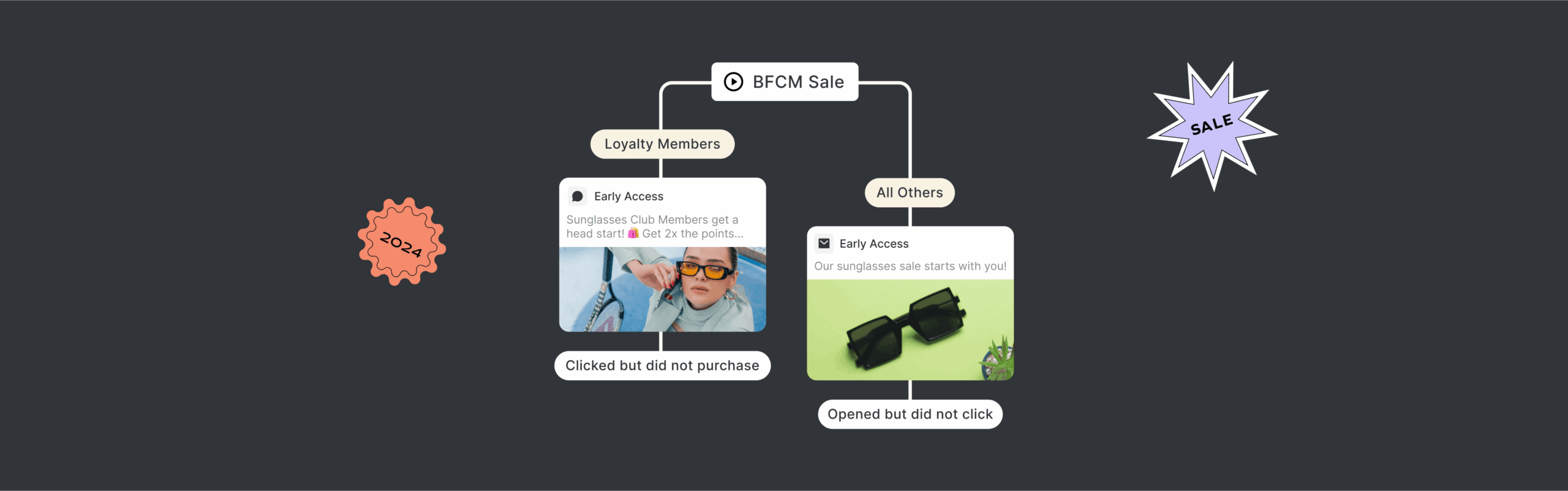
Target Loyalty Members with Early Access
Loyalty members are already likely to be some of your more frequent shoppers. So, make them feel the love by letting them grab a bargain before anyone else.
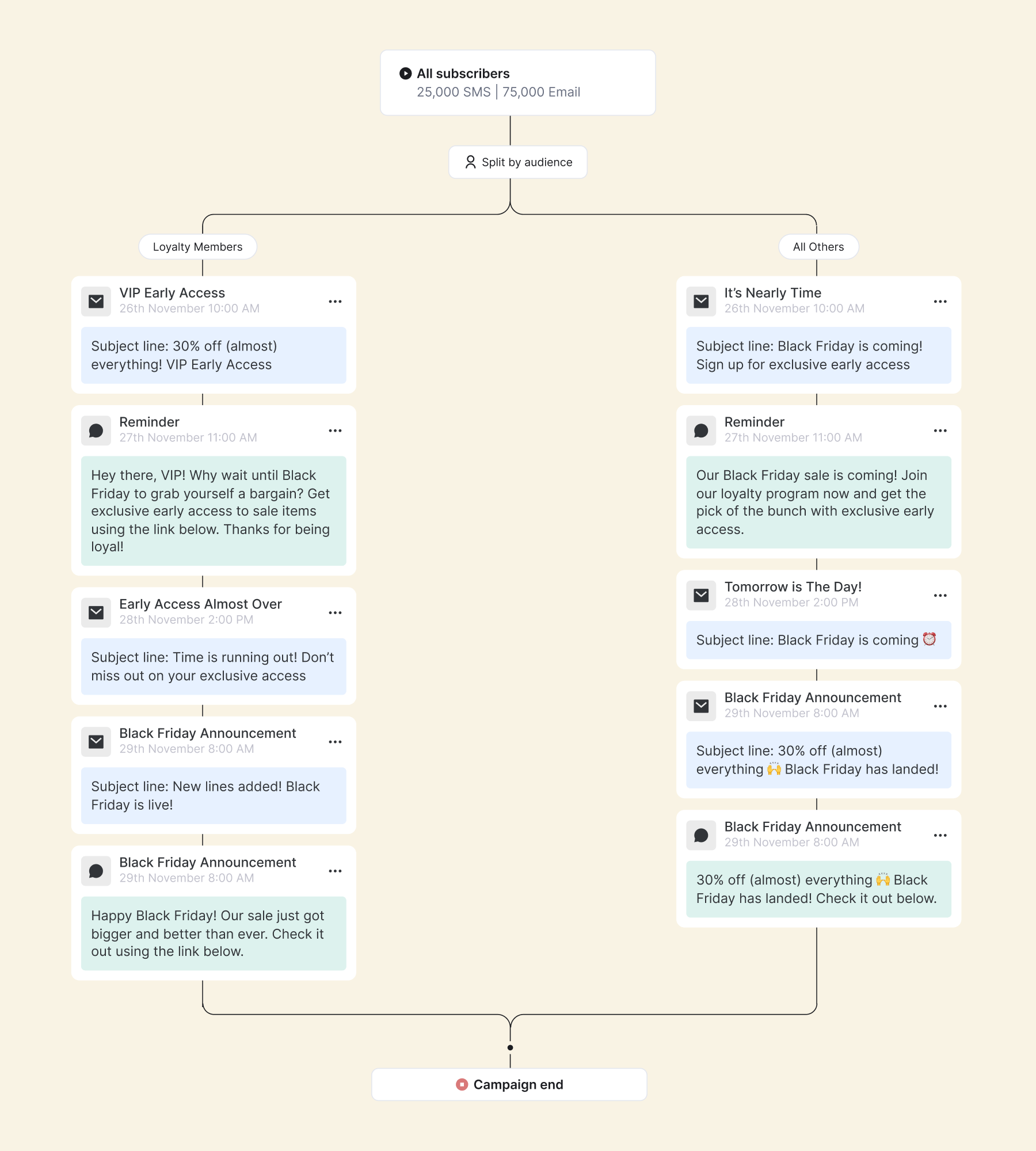
These multi-message campaigns have two main objectives:
- To target loyalty members with VIP early access while priming the rest of your subscribers for the discounts that are about to come.
- Use the lead-up to BFCM to incentivize other subscribers to sign up for your loyalty program.
Tailor Offers Based on Purchase Frequency
This multi-message campaign is focused on splitting out your subscribers based on how often they’ve purchased from your brand. In this way, each email can take into account their existing relationship with your brand.
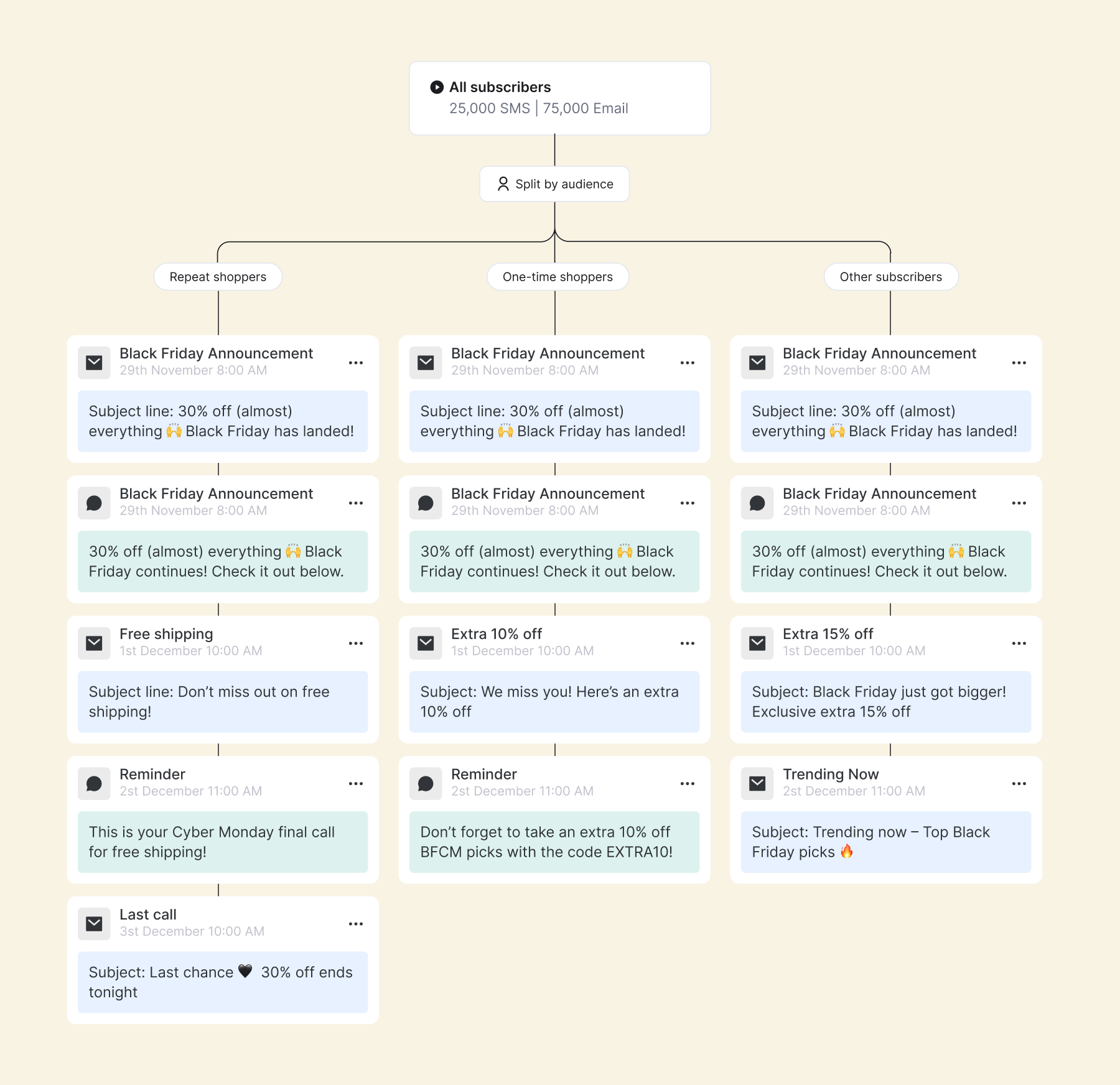
Naturally, one-time shoppers and other subscribers have usually shown less past engagement than repeat customers, so you want to send more enticing offers to get them to come back to shop during BFCM. For this audience (especially those who have never purchased from you before), social proof and educational content can be hugely effective at convincing them “why” they should buy.
In this campaign, repeat shoppers receive more messages because they’ve already demonstrated an affinity with your brand and have some level of engagement.
Leverage Past Engagement History
This campaign focuses on segmenting by subscriber engagement levels. The strategy is to change tactics early and often, following up with shoppers who don’t click within an email with an SMS to see if a different channel grabs their attention.
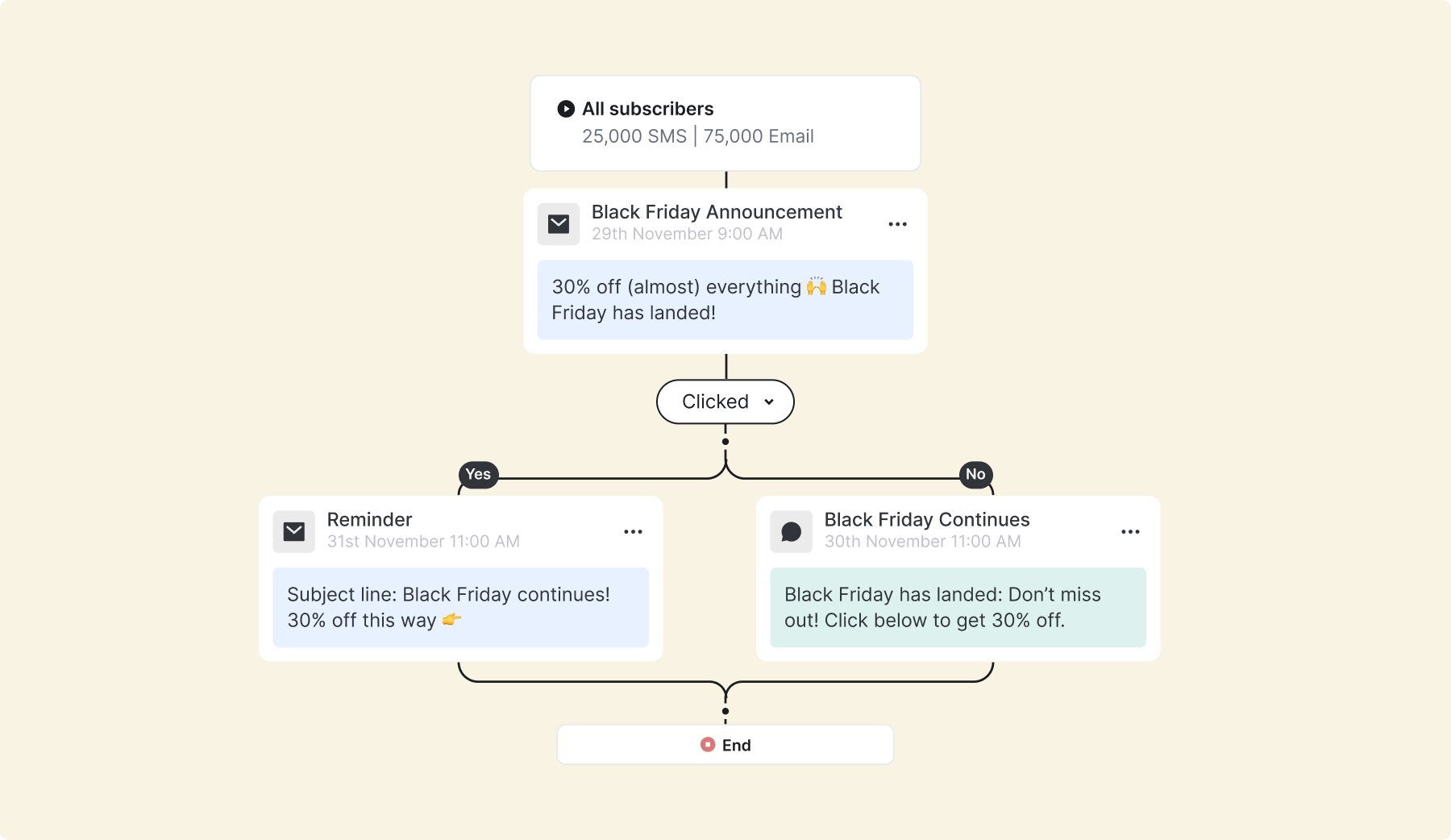
By sending a quick follow-up email to subscribers who clicked, you maximize your chances of sustaining their attention and increase your chances of conversion by communicating on a channel they previously engaged with.
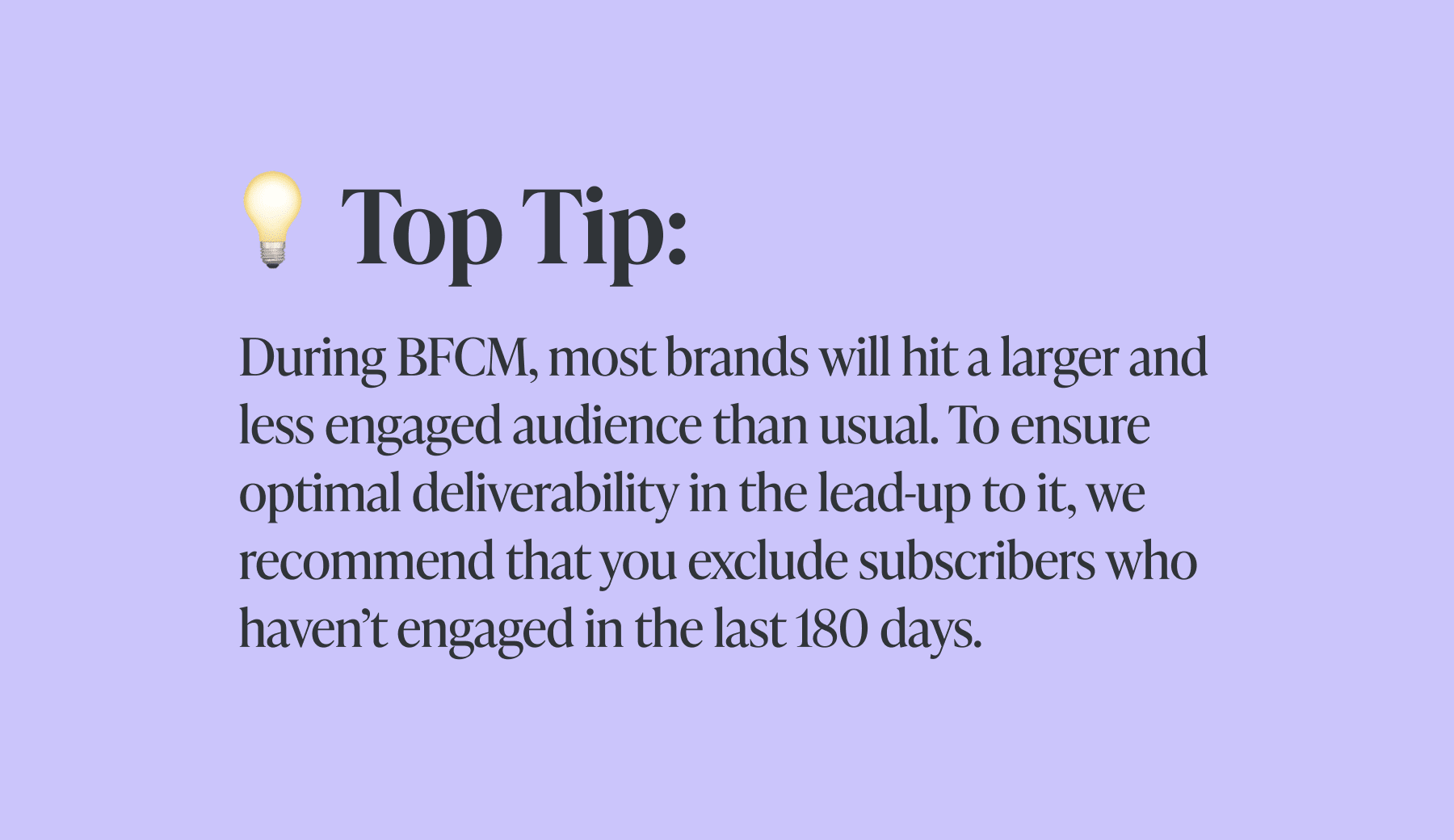
If you want to build off this campaign further, it’s recommended to follow up more frequently with engaged subscribers and less with unengaged subscribers. While it may seem like more messages are better for increasing your likelihood of getting an unengaged shopper’s attention, they’re actually more likely to mark messages as spam, which can hurt your deliverability.
Use Their Preferred Channel
This strategy caters to customer preferences in how they prefer to receive communications from your brand. By targeting subscribers based on the channel they engage with more, you boost the likelihood of grabbing their attention at a time when they’ll be bombarded with offers from brands.
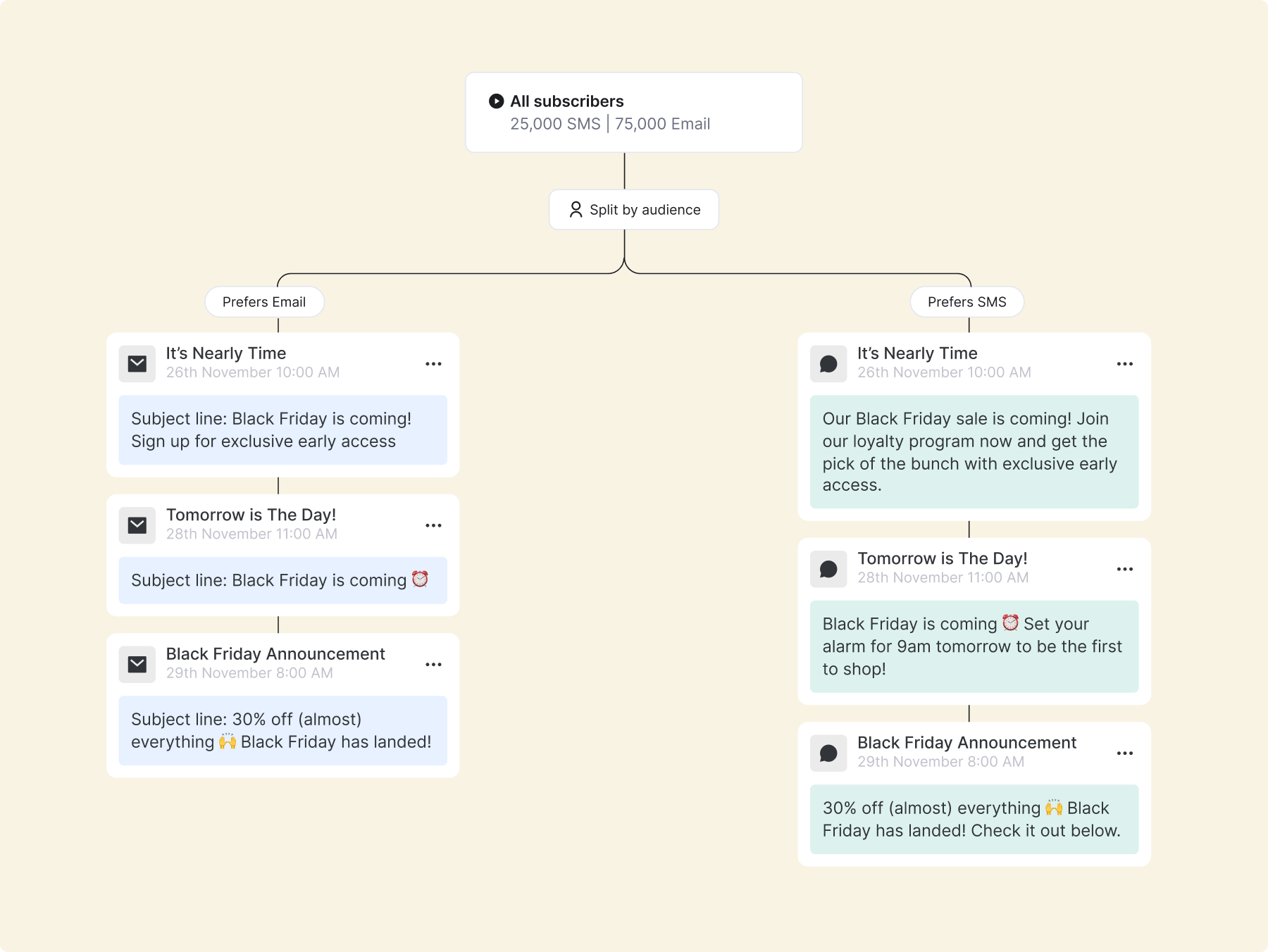
The best way to segment channel preferences is based on their past behavior.
We recommend you define your audiences in this way:
- Prefers SMS: Hasn’t opened or clicked an email in the last 60 days, but has clicked an SMS in the last 60 days
- Prefers Email: Hasn’t clicked on an SMS in the last 60 days, but has opened/clicked an email in the last 60 days
Shoppers who haven’t shown any preference (have neither engaged with SMS or email) will automatically fall into the “All Others” category. You can use this group however you choose, but overall consider sending fewer messages to reduce unsubscribes from this fairly unengaged group.
Other BFCM Segments
Of course, there are a million and one ways to build personalized strategies for your customers. Here are a few other segments to pay attention to:
- Shoppers who haven’t made a recent purchase
These subscribers should not be forgotten – chances are they just need an extra nudge (or a big discount!) to bring them back to your brand. The exact amount of time since the last purchase will vary based on your industry (for example, health and beauty shoppers tend to have more frequent purchases than furniture buyers), but generally, around three months is a good benchmark. For this group, it’s suggested to send a couple of messages, and then create a separate cohort for targeting based on those who clicked/opened the initial messages.
- Last year’s BFCM shoppers
This group has demonstrated that they’re incentivized by sales. Consider offering them exclusive offers (especially ones with a sense of urgency) to bring them back to buy this season.
- Window shoppers
Re-target customers who have been browsing on your site with product-specific discounts relevant to what they’ve already shown interest in. This group is likely shopping around and comparing prices for holiday gifts, so offering a really appealing discount can be the motivating factor to get them to convert.













 Join a free demo, personalized to fit your needs