








“Yotpo is a fundamental part of our recommended tech stack.”
 Laura Doonin, Commercial Director

The Loyalty game has changed. Points and predictable perks aren’t enough anymore. Today, shoppers swipe, scroll, and tap through infinite choice, rewriting the rules of brand devotion in real time. Retention costs climb, lifetime value plateaus, and brands are asking the hard questions: what does true loyalty look like, and how do you earn it in a world where anyone can launch a program?
The New Rules of Loyalty is our answer. Across three insight-packed, data-driven volumes, we show how brands turn fleeting attention into lasting connection. Drawing on insights from top industry leaders, real-world brand stories, analysis of 1k+ brands, and 45k+ survey responses collected from global respondents across all generational cohorts from Gen Z through Baby Boomers, we explore what works, what fails, and what’s next.
Loyalty used to live in one place, a punch card, a phone number, a login. Not anymore.
Loyalty today moves across devices, between physical and digital spaces, showing up wherever customers are. This volume reveals the new rules of omnichannel loyalty: tackling the new reality of seamless experiences, the strategies that turn fragmented touchpoints into fluid journeys, the technology that matters, and the moves that put you ahead of customers’ expectations instead of chasing them.

We live in a world where you can unlock your phone with your face, pay for coffee with your watch, and have AI fill in your passwords before you even think about them. Your car remembers your seat position, and Netflix picks up exactly where you left off, even on a different device. Everything in modern life just… works.
That expectation of effortlessness doesn’t stop at checkout screens or streaming apps. It now extends to loyalty.
Walk into your favorite store (the one where you’ve spent thousands) and hear those four soul-crushing words: “What’s your phone number?” Download their app and discover your points don’t exist there. Shop online and realize your in-store purchases vanished into the void.
In an era where technology can practically predict what you’ll want next, why do some loyalty programs still feel stuck in the past?

Today’s customers live everywhere. They’re double-tapping on Instagram, browsing on websites, and walking into stores, sometimes all within the same purchase. They don’t see these as different channels. To them, it’s one long, ongoing conversation with your brand.
But some loyalty programs act more like that friend-of-a-friend who still introduces themselves every time you meet. Points trapped online like digital prisoners, different perks depending on where you shop, and zero continuity from one experience to the next. It’s not just annoying, it’s exhausting.
When brands make loyalty as effortless as unlocking a phone, customers stop thinking about the program and just live it. In an everywhere-commerce world, omnichannel loyalty isn’t a nice-to-have, it’s the baseline expectation.
Sarah discovers your brand scrolling on TikTok late night in bed. She follows it on Instagram at lunch the next day then browses the website during her 3pm slump. That night she downloads the app for the exclusive welcome offer but heads into the store on Saturday to touch the actual product. She ends up buying through the app because hello, bonus points.
This isn’t five different interactions, to Sarah, it’s one slowly escalating flirtation with your brand. But most loyalty programs treat her like five different strangers who’ve never met.
Customers don’t think in channels, they think in relationships. They expect to be recognized whether they’re doom-scrolling at midnight or standing in your store at noon. They assume their points work everywhere, and when brands actually deliver on that expectation, that’s when loyalty graduates from program to obsession.
Among customers who always join the loyalty programs of brands they shop, that jumps to 51%.
Your ride-or-die members, the ones who actually care enough to sign up, are the most frustrated by your tech limitations.
When half of loyalty members feel like they’re dealing with different versions of your brand, you’re not building loyalty, you’re actively torching it. Every “I don’t see your rewards in our system,” every point that doesn’t transfer, every time they have to re-introduce themselves is another hit to a relationship you’ve worked hard to build.
But, when you connect the dots between channels, when recognition becomes instant and rewards effortlessly flow, that’s when loyalty is strengthened.

Target mastered this with Target Circle, they made the program invisible until it matters. No more hunting for deals in the app, no more manually clipping offers, no more “did I remember to activate that?” When you check out, online or in-store, your deals just apply. Automatically. Your points are already there and your birthday reward shows up without you asking.
This automatic application of rewards is what customers increasingly expect. When you check out your loyalty status unlocks the pricing you’ve earned without you having to think about it. This is what happens when a brand stops treating channels as separate worlds. Your Target Circle account doesn’t care if you’re shopping on your couch or standing in the toothpaste aisle. It’s the same cart, the same rewards, the same seamless experience.

Loyalty isn’t just a rewards program, it’s the connective tissue that turns fragmented touchpoints into a continuous journey, into one relationship that deepens with every interaction.
It’s the reason a customer who browses on Instagram, abandons cart on your website, walks into your store, and finally buys through your app feels like they’ve had one seamless conversation with your brand instead of four disjointed encounters with strangers.
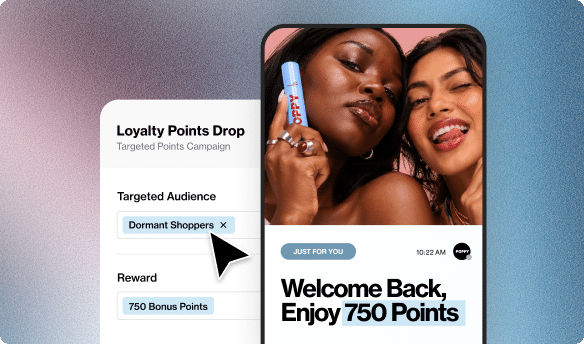
Loyalty remembers that someone added items to their cart at midnight. Loyalty knows they’re 50 points from their next reward when they walk into your store. Loyalty triggers the “welcome back” push notification with a personalized offer based on their browsing history. Loyalty is what makes the difference between a customer thinking “I shop here sometimes” versus “this is MY brand.”

What Loyalty-as-Connective-Tissue Actually Means:
It connects data across channels: Your app knows what they browsed on the website. Your store associate sees their online purchase history. Your email platform knows they’re a VIP who deserves early access. Everything talks to everything.
It creates behavioral continuity: Actions in one channel trigger responses in another. Browse on mobile and receive a push when it’s in stock at your local store. Abandon a cart online and you get an SMS with your points balance and a reminder. Visit a store, and the app updates with in-store exclusive offers.
It builds identity and belonging: Loyalty isn’t just points, it’s status. It’s tier levels. It’s being recognized as a VIP everywhere you go. It’s the difference between being a transaction and being a member of something.
It enables personalization at scale: Because loyalty connects all your data, you can deliver truly personalized experiences. Not “Dear [First Name]” personalization. Real personalization based on actual behavior across every channel.
Sephora’s Beauty Insider program is a textbook example of loyalty as connective tissue. Shoppers earn the same points whether they buy online, in the Sephora app, in a standalone store, or at Sephora at Kohl’s, and they can redeem those points across those environments as well. To the customer, it doesn’t feel like separate systems or partners; it feels like one continuous Beauty Insider identity that unlocks rewards everywhere they interact with the brand.
When loyalty connects everything, customers stop experiencing channels. They just experience your brand. Seamlessly. Everywhere. And investing in these channels both improves retention and uplifts revenue.
That’s why getting omnichannel right isn’t optional, just look at what happened when Colorescience optimized their already-connected channels.
Colorescience had something most brands dream of: a successful omnichannel program connecting their DTC site with their dermatologist and medical spa network. Customers could already shop both online and in-office. But they knew they could do better, so they optimized. They made their rewards more valuable and clearer. They added in-office rewards that made dermatologist visits more rewarding. They created members-only offers that made loyalty feel exclusive and they launched bonus point promotions that gave customers reasons to engage more frequently.

The impact of these optimizations? Transformative. Customers who redeemed rewards showed a 30% repeat purchase rate versus just 10% for non-redeemers. That’s not just double, it’s triple the retention rate. Not from adding new channels, but from making their existing omnichannel experience actually worth engaging with. This is the lesson: connecting channels is just the foundation.
The real magic happens when you optimize how those channels work together. When customers can earn points at their dermatologist and redeem them online. When early sale access works everywhere. When members-only offers follow them from screen to spa. That’s when omnichannel loyalty transforms from a feature into a differentiator.
This is the compound effect of omnichannel loyalty. When customers can earn and redeem seamlessly across channels, they engage more, when they engage more, they redeem more, and when they redeem more, they purchase more frequently. Colorescience proved that omnichannel isn’t just about meeting customer expectations, it’s about multiplying customer value.
What this all means: Channels are dead. Customer journeys are everything. When loyalty flows as naturally as your customers do, it stops being a program and starts being a relationship. The brands winning aren’t trying to perfect individual channels; they’re eliminating the very concept of channels. Because your customers already have.
Looking Forward:

You can have the most generous rewards, the most creative tier names, the most beautiful branding but if your tech stack can’t connect the dots between channels, you’re just running an expensive points program that frustrates customers more than it delights them.
The brands winning at omnichannel loyalty understand that “loyalty-as-connective-tissue” is only as strong as the infrastructure underneath it. You need systems that actually talk to each other, integrations that move data in real time, and partners who were built to be part of an ecosystem, not just another silo.
Amazon taught shoppers how effortless one-click checkout could be. Apple taught them that Face ID is faster than typing in a passcode. Every day, the best UX in the world is training your customers to expect instant recognition and zero friction.
They don’t have patience for clunky experiences anymore and they definitely don’t have patience for loyalty programs that make them work for their rewards.

Your customer’s phone is within arm’s reach for 16 hours a day. They check it 96 times (or more) daily. It knows their credit cards, their Face ID, and their deepest 3am shopping desires. It’s literally the most intimate relationship they have with a device.
And your loyalty program is… sending them to a website to log in?
Mobile isn’t just another channel. It’s THE channel. The control tower, the universal remote for modern life and more importantly for loyalty: mobile is the hub that connects everything else.
Your app is where Instagram browsing meets purchase intent, where in-store visits trigger notifications, where email clicks become cart additions, and where loyalty status unlocks exclusive access. Mobile is the place where customers can see and feel their entire relationship with your brand.
Apps convert 63% better than mobile web.
Mobile is where your customers already are, doing everything else seamlessly. They handle everything with ease from their phones, and their expectation when it comes to loyalty is no different. Loyalty is a living, breathing part of the customer experience. And when it’s built directly into your app, it becomes the most powerful retention lever you have.
The brands that get this, the ones that put mobile at the center not the edges, are building something bigger than programs. They’re building habits, daily check-ins, and notification anticipation. The kind of behavior that makes loyalty automatic, not optional.

Putting mobile at the center actually means you have to stop asking “How do we get customers to download our app?” and start asking “How do we make our app so valuable they can’t delete it?”
Princess Polly has customers who check the app multiple times a day. Not because they’re always buying, but because the app is where the magic happens. Exclusive drops, VIP status updates, where that “you’re in” feeling makes customers feel like insiders. Princess Polly’s app is able to surface loyalty tier progress the moment users open the app, turning casual browsers into repeat buyers. And The app results speak for themselves: 98.4% retention rate among app users and 27% higher CVR and 13% higher AOV on the app vs. mobile web
Loyal customers check in daily for new drops, exclusive offers, and early access. The app isn’t a feature, it’s the foundation. Everything else, the website, the store, the Instagram, feeds into it. Mobile becomes the thread that stitches every channel together.

When customers treat your app like they treat Instagram (constant checking, notifications on, panic when their phone dies), you’ve officially made mobile your loyalty command center.

But here’s the thing: mobile can only be your command center if it’s actually connected to everything else. An app that doesn’t talk to your e-commerce platform, your POS system, your wallet passes, your messaging tools, that’s not a command center.
This is why Princess Polly didn’t just build an app. They built an app that integrates with Tapcart and Yotpo Loyalty, creating a connected ecosystem where loyalty data flows seamlessly between mobile, web, and store. The app works because it’s a bridge, not an island. The power of mobile-first loyalty isn’t the app itself. It’s what the app enables when properly connected.

Omnichannel loyalty only works if your tools actually connect. If data flows instantly. If actions in one channel trigger responses in another. That’s why it’s crucial to find platforms that actually want to work together. That have pre-built integrations that share data in real-time, not just in batches. This is where partnerships matter.
Here’s what real connectivity looks like: your e-commerce platform and loyalty system are best friends. Points earned instantly, rewards redeemed seamlessly, customer data flowing both directions in real-time. Your POS systems (whether Shopify, Magento, Salesforce Commerce Cloud, or custom builds) sync immediately with digital profiles, so in-store purchases appear in the app before customers leave the building. Your mobile app doesn’t just display loyalty data, it becomes the central nervous system connecting e-commerce, messaging, and in-store experiences through real-time integrations.

And then there’s the bridge that changes everything: wallet passes. This is where the friction of “What’s your phone number?” becomes obsolete.
A customer adds your loyalty pass to Apple Wallet or Google Pay once. From that moment on, the pass lives right next to their credit cards and boarding passes, all the things they actually use every day.
When they’re near your store, it lights up on their lock screen. When they’re ready to check out online, one tap surfaces everything. When they walk into a physical location, the pass can trigger location-based notifications.
LSKD saw redemptions increase 116% after implementing Novel’s wallet passes.
Not because they added more rewards. Not because they increased point values. Not because they ran a promotion. They removed the single biggest friction point: accessing your loyalty benefits.The rewards were always there. Customers just couldn’t get to them easily enough. Novel’s wallet pass technology connects the online loyalty platform to the physical store experience with zero friction.

By tying data collection directly to rewards, these brands make the value exchange obvious, turning what could feel like a brand ask into a moment of recognition and reward.

LSKD didn’t grow redemptions by inventing a new kind of reward. They grew redemptions by making the existing ones effortless to access. That’s the quiet superpower of real integrations: they don’t ask customers to care about your tech stack, they just make everything feel obvious.
Because at the end of the day, this integration focus isn’t just about technology, it’s about the experience customers feel. When your platforms are truly connected, loyalty data moves in real time, follows the customer into every channel, and surfaces precisely when it matters. First you build the bridges and then you choose what travels across them. And the first thing that should flow freely across every channel is your messaging.

Digital fatigue is real. Your customers are drowning in notifications, emails, and texts. The brands winning aren’t adding to the noise, they’re orchestrating meaningful moments that customers actually want. They’ve figured out how to streamline the experience for their most loyal customers, cutting through the clutter with messages that matter.
Push notifications. SMS. Email. These aren’t three separate channels with three separate strategies. They’re one unified messaging stack that, when orchestrated through loyalty, creates urgency customers can’t ignore.

You can have the best push platform, the best SMS tool, the best email system, but if they’re not connected through your loyalty platform, reading from the same customer data, triggered by the same behaviors, you’re just sending disconnected messages into the void.
The Messaging Trinity:
Push Notifications = Immediacy: They’re on your phone. Right now. With 42% open rates and instant attention, push is for urgency, for moments that matter, for making customers feel like insiders who can’t afford to miss what’s happening.
SMS = Personal and Direct: Text messages feel intimate. You don’t text spam, you text people you actually care about. Which is why SMS is perfect for loyalty milestones, personalized by tier status and actionable with one-click redemption.
Email = The Detailed Conversation: Email is where you go deep. Monthly points summaries, tier progress reports, personalized product recommendations based on loyalty data. This is where the relationship deepens, where you explain, where you showcase. Where loyalty becomes a story, not just a notification.

But here’s where it gets powerful: when push, SMS, and email work together through loyalty, you create something unstoppable. Urgency + exclusivity + fear of missing out = the psychological trifecta that turns casual shoppers into obsessive fans.
Picture this orchestrated sequence:
9am: VIP customer gets a push notification: “24-hour exclusive drop for Gold members.” They’re at work, can’t shop yet, but the seed is planted.
Lunch: They check Instagram and see other VIPs posting their hauls. FOMO intensifies.
3pm: SMS arrives: “Drop ends in 6 hours, you have 1,000 points ready to use.” They tap. One-click redemption. Purchase complete.
Evening: Email lands: “Thanks for being Gold, here’s a preview of next week’s drop just for you.”
That’s three messages, three channels, one unified story creating unstoppable momentum. It works because loyalty is the connective tissue orchestrating everything.
LSKD takes orchestration to another level with their app-exclusive drops. They create moments of scarcity that customers are terrified to miss, and they orchestrate them perfectly across push, SMS, and email. Limited drops announced via push. Inventory so scarce that if you don’t act within 30 minutes, it’s gone. Not “while supplies last” in a vague corporate way, but actually sold out. Verifiably gone. By rewarding early engagement behaviors like push opt-ins and app downloads, LSKD has built a direct line to its most loyal customers ensuring they never miss a drop. Customers keep notifications on. They respond to SMS instantly. They check email for previews. Not because LSKD begs them to, but because the fear of missing the next drop is too strong.

This is where best-in-class partnerships become game-changers. Just like Tapcart and Yotpo Loyalty integrate seamlessly to deliver perfectly timed push notifications the same needs to be happening with SMS and Email. That’s why platforms like Attentive aren’t just SMS and email tools, they’re bridges between your loyalty program and your customers’ most intimate communication channels. The SMS platform talks to the loyalty platform talks to the e-commerce platform, and the customer just experiences magic.
Brands can automatically send messages when customers earn points, hit VIP tiers, or approach rewards. That turns loyalty data into messaging fuel: instead of generic blasts, customers get personalized messages triggered by real loyalty events.
Once your messaging stack runs on loyalty data, you’re not just sending notifications, you’re staging moments. And the most powerful of those moments tap into one thing: FOMO.
When these bridges actually work, when data flows seamlessly, you get a multiplier effect:
A customer browses late at night, abandons cart. Next day, SMS arrives: “You’re 50 points from free shipping.” They tap, app opens via Tapcart, cart loaded, points ready. Purchase complete.
Week later, in-store. Wallet pass lights up. Associate sees purchase history: “I see you bought those jeans, we just got the matching jacket.” They buy. Points instant.
That night: “You hit Gold status! Early access starts tomorrow.”
One continuous journey. Multiple tools talking. Loyalty as connective tissue. That’s not spam or desperation, it’s strategic orchestration that makes customers feel like insiders who can’t afford to look away. That’s one continuous journey powered by multiple tools that actually talk to each other. The loyalty platform is the connective tissue, but the integrations are what make it flow. The brands that win aren’t the ones with the most tools. They’re the ones where all the tools actually talk to each other. Where data flows like water. Where one action in one channel ripples across every other channel instantly.
The tech exists. The integrations exist. The question is: are you building bridges or silos?

What this all means: When your tech stack actually connects, when messages orchestrate perfectly, when mobile becomes mission control, loyalty transforms from something customers manage to something they simply experience. The winners won’t be the brands with the most tools, but the ones where every tool amplifies the others.
Looking Forward:

For years, people predicted retail’s death. “Everyone will shop online.” “Stores will be obsolete.”
Turns out, they were wrong. Stores aren’t dying, but it is harder to get customers through the doors. They can buy everything from their couch. Same-day delivery exists. Virtual try-ons are getting scary good. The friction of driving, parking, and walking into a store feels massive compared to one-click checkout. So if you’re going to ask customers to leave their homes, you better make it worth the trip.
This is why stores that offer something more experiential are thriving. The fluorescent, purely functional locations that offer nothing you can’t get online? Those are in trouble. But stores that understand their new role in the omnichannel ecosystem, that give customers something they can’t get through a screen like exclusive access, human connection, and moments worth sharing, are thriving.
The most successful physical retail locations don’t compete with digital, they complete it. They understand that in-store visits are now high-intent moments. Customers who make the effort to show up are your most valuable audience. They’re not browsing, they’re investing their time. And that investment deserves a payoff that goes way beyond a basic transaction.
Think about it: Your online store is always open, infinitely stocked, and never has a line. Your physical store needs to offer what digital can’t, tangible experiences, immediate gratification, human expertise, and the kind of loyalty moments that turn shopping into an event.
Because customers who shop both online and in-store spend more, stay longer, and become more loyal than single-channel shoppers.

The store’s role has changed. It’s no longer just a place to ring up a transaction, it’s where the digital journey becomes tangible. Where browsing history meets real product. Where loyalty status unlocks exclusive experiences. Where the connective tissue of loyalty becomes something you can see, touch, and feel.
Think about Apple stores. Nike flagship locations. Glossier’s showrooms. These aren’t just stores. They’re destinations. Experiences. Content creation factories. Places where customers go not just to shop, but to feel like they’re part of something.
In Nike’s concept stores, membership unlocks in-store perks like express checkout, store-to-door delivery, and easy buy-online-pick-up-in-store options, all connected to a single Nike Member ID across apps and website. The result is a store experience that feels like a physical extension of the app: same account, same benefits, same relationship, just in 3D.
Your store should be the ultimate expression of your brand. The place where loyalty gets tangible. Where that “add to wishlist” from your app turns into “Let me grab that for you to try on.” Where digital status becomes physical experience.
The younger your customers, the higher their expectations for this kind of seamless integration. Gen Z shoppers are significantly more comfortable with in-store tracking than older generations.
Only 21% of Gen Z say “no tracking” compared to the 33% overall. The generation that grew up with smartphones expects brands to remember them everywhere, including in physical stores.
When a customer walks into your store and their phone knows they were browsing specific items online, that’s not creepy, it’s helpful. “Those jeans you saved last night? They’re in stock here and you have enough points to get them for 20% off.”

This isn’t theoretical. Survey data shows that among loyalty program members the desire for an experience that connects online and in store is even higher than non-loyalty members. 37% want their in-store browsing to influence online suggestions and 25% want notifications while in-store for items they browsed online. The expectation is already there. The question is whether you’re meeting it.
As shoppers said:

Experiential loyalty is where emotional connection becomes physical reality. It’s not about what customers get (products, points, perks) but about what they feel (special, recognized, part of something). And those feelings, created through exclusive events, personalized service, and memorable moments, drive deeper loyalty than any discount ever could.
If customers are making the effort to visit your store in an era of one-click checkout, you better give them experiences they can’t get through a screen. The most successful retailers have figured out that stores aren’t just for transactions anymore, they’re stages for loyalty experiences that deepen connection and create memories worth sharing.
VIP Shopping Events: Your Gold-tier members get an invitation to shop after hours with champagne and exclusive first-access to new collections. They post it on Instagram. Their friends see it. Suddenly everyone wants Gold status.
You’ve turned your store into a nightclub with a velvet rope. Access isn’t just about money, it’s about loyalty. About status earned through engagement across every channel. When physical experiences become exclusive rewards, loyalty transforms from points to privilege.
Community Meetups: Lululemon’s run clubs. Sephora’s beauty classes. REI’s climbing clinics. These aren’t just customer acquisition tactics. They’re loyalty deepeners. Customers come for the event, stay for the community, and bond with your brand in ways a transaction never could.
When you reward attendance with points (or make events exclusive to certain tiers), you’re connecting the physical experience to the digital loyalty journey. The run club earns points. The beauty class unlocks a new tier. The physical experience accelerates the digital progression.
Digital Layers in Physical Space: Interactive mirrors that show product reviews. QR codes that pull up your entire browsing history. Tablets that let associates check inventory across all locations and ship from anywhere. Associates aren’t just salespeople anymore, they’re loyalty ambassadors armed with full customer context.
The store becomes a playground where every interaction can deepen loyalty. Not just buying, but trying, learning, connecting. When you make the store a stage, customers don’t just shop, they perform, they participate, they belong.
The store is where loyalty becomes real. Where digital benefits manifest physically. Where the effort of showing up gets rewarded with experiences that remind customers why some things are worth leaving the house for.

Here’s the uncomfortable truth: most of the friction in omnichannel loyalty happens at the seams. The moments when customers move from one channel to another. Digital to physical. Online browsing to in-store shopping. Mobile app to checkout counter.
These transition points are where loyalty either flows seamlessly or breaks completely. Where customers either think “wow, they really know me” or “why do I have to prove I exist again?”
As real shoppers said:
The best brands have figured out that when you remove friction at these seams, you don’t just make the experience smoother, you unlock the ability to turn every single touchpoint into a loyalty moment. Loyalty can extend beyond transactions to every meaningful interaction, brands can reward learning, engagement, and authentic behavior not just spending.

Traditional loyalty only rewards transactions because transactions are the only things easy to track. You bought something. Here are points. Done.
But modern customers are engaging with brands in dozens of ways that create value but don’t happen at a register. The only reason these moments go unrewarded is friction. The friction of recognition. The friction of attribution. The friction of tracking.
Remove that friction, through instant recognition, seamless integrations, connected data, and suddenly every moment becomes trackable. Every engagement becomes rewardable. Every touchpoint becomes an opportunity to deepen loyalty.

The store isn’t just a place to buy. It’s a place to engage. And when loyalty is the connective tissue, every engagement can unlock something meaningful:
In-store engagement rewards:
Educational engagement benefits:
Sustainable actions perks:
Status and recognition rewards:
The store becomes an experience playground where engagement builds different types of value: social status, exclusive access, personalized service, community belonging. Some rewards are instant (surprise gifts), others build over time (tier progression), and many create emotional value that transcends any point system.

When Glossier shoppers visit their stores, they don’t just earn points, they get their photos on the wall, early product testing opportunities, and invites to influencer meetups. When Rapha cyclists visit their clubhouses, they don’t accumulate points they join group rides, get free coffee, and access professional bike fitting services.
All of this data flows back to the digital profile, creating a rich understanding of what each customer values. Not just what they buy, but what experiences matter to them. That continuous loop of engagement and recognition is what transforms stores from transaction centers into loyalty accelerators.
That’s the power of stores when they’re connected through loyalty. They’re not competing with digital. They’re completing it. They’re where the relationship deepens. Where status becomes experience. Where loyalty moves from abstract to visceral.

The most successful physical retail locations understand this: they’re not channels, they’re stages. And loyalty is the script that makes every customer feel like the star of their own story.
Knix is a powerful example of how physical retail can amplify loyalty performance. Their data shows that customers who live near stores not only spend more, they engage more deeply in their loyalty program. Because of that, Knix is intentionally weaving more exclusivity into in-store experiences: private shopping appointments, member-only events, and early access both online and offline. The goal isn’t just to reward behavior, it’s to make stores feel like an extension of Club Knix itself. And according to their team, they’re only at the beginning of what in-person loyalty can unlock.
When brands nail the physical-digital connection, the financial impact is immediate and measurable.
LSKD saw redemptions increase after implementing wallet passes, not from adding rewards, but from making them accessible. The math is simple: reduce friction, increase engagement. Increase engagement, improve retention. Improve retention, multiply lifetime value. When Knix discovered customers near stores show higher LTV and deeper loyalty program participation, they didn’t just note it, they doubled down on in-store exclusivity. Because omnichannel customers don’t just spend more per transaction, they transact more often, stay longer, and become your most valuable segment.
The investment in omnichannel infrastructure pays for itself through retention alone. This is why the brands winning aren’t asking if they can afford to go omnichannel, they’re realizing they can’t afford not to.

What this all means: Stores are evolving into the ultimate loyalty accelerator. When physical spaces become stages for experiences you can’t download, when every visit justifies the effort of showing up, when in-store becomes the place where digital loyalty becomes tangible, that’s when retail transcends transaction and becomes transformation.
Looking Forward:

The next evolution of loyalty isn’t coming, it’s already being built.
From universal wallets to AI-powered personalization, the line between “program” and “invisible infrastructure” is starting to blur. The mechanics of earning and redeeming points are still there, but they’re fading into the background as loyalty becomes something that simply happens around the customer, wherever they are.
The future doesn’t look like a dozen disconnected programs. It looks more like a network: decentralized, portable, and shared. Points that can move across brands, not just channels. Status that follows you from one retailer to another. Rewards that accumulate everywhere you shop, redeemable anywhere you choose.
This ecosystem approach isn’t fantasy, customers are already asking for it. They want integrated wallets that work across retailers. They want the brands they love to collaborate on rewards. They want loyalty that moves with them, not loyalty that traps them.
The future of loyalty looks more like credit card networks than individual programs. Decentralized. Portable. Universal. Imagine points that work across brands, not just channels. Status that transfers between retailers. Rewards that accumulate everywhere you shop, redeemable anywhere you want.
This ecosystem approach isn’t fantasy, it’s already starting. Take Subtotal, which is building the infrastructure for universal loyalty right now. For brands that sell both online and in stores, Subtotal delivers the missing piece: the ability to recognize and engage retail customers just like the digital ones. It is quickly becoming the gold standard in merchant account linking by making it easy for shoppers to share their itemized retail purchases with brands by linking their retailer memberships to their accounts on brand websites.
And when Yotpo brands integrate with Subtotal, something remarkable happens: customers automatically earn loyalty points when they shop at retail partners. No separate programs to join. No new apps to download. No codes to remember.

Buy your favorite brand at Target? Points hit your account automatically. Purchase at a local boutique? Same points, same program, instant recognition. Your loyalty follows you into any store that carries the brand, creating unified customer profiles that show the complete picture: online purchases, retail partner transactions, everywhere you engage with the brand.
This is the bridge between today’s fragmented reality and tomorrow’s unified ecosystem. Subtotal makes loyalty deeply embedded into retail checkout experiences, expanding program reach to entirely new audiences who might never visit your DTC site but love your products at their favorite retailers.
Imagine this scaled across the entire commerce landscape. Your morning coffee earns points that work at your favorite clothing brand, your workout class attendance unlocks perks at your grocery store, your sustainable choices at one retailer improve your status everywhere. Not separate programs with separate apps and separate points but instead one fluid system where loyalty flows as freely as payment.
The technology exists. The demand exists. Subtotal is proving it works. The only question is which brands will build these bridges first and which will wait until customers demand it.

The ultimate omnichannel experience is when you never have to think about it.
Real-time rewards that apply automatically. Predictive perks based on your actual behavior. Loyalty that anticipates what you need before you know you need it.
Your car suggests a store visit based on your wishlist. You walk in, everything’s ready. You leave, and personalized offers for next week are already waiting. No apps to open. No numbers to remember. No codes to enter. Loyalty stops being something you manage and starts being something that just happens.
Everything in this volume from mobile command centers, wallet passes, unified messaging, and experiential stores, it all exists today. The technology is here, the integrations work, and customers expect it.
But here’s why moving first matters more than ever: We’re entering the AI commerce era, where purchase decisions happen in new ways.
In today’s AI-powered, everywhere-commerce world, shoppers no longer think in channels; they think in moments. Whether it’s TikTok Shop, Amazon, a retail shelf, or an AI agent researching options for them, customers expect brands to show up seamlessly, everywhere. And increasingly, they’re not making these decisions alone, they’re assisted by AI that surfaces options, compares benefits, and makes recommendations.
Here’s the critical insight: When a customer (or their AI assistant) is comparing options, what tips the scale? Price might be similar. products might be comparable and shipping might be identical. But relationship history aka accumulated points, tier status, exclusive access, that’s the differentiator that makes the choice obvious to the customer.
Think about it, your customer asks their AI assistant to reorder skincare. The AI presents options. But one brand they know they have Gold status, 500 points waiting, free shipping, early access to sales, and a history of satisfaction. The decision makes itself. The customer chooses the brand where they’ve invested and that’s invested in them.
Loyalty gives customers undeniable reasons to choose you, reasons so clear that whether they’re deciding themselves or their AI is presenting options, you win. The accumulated value of the relationship becomes the tiebreaker in every decision.
While competitors debate whether to connect their channels, leaders are building these relationship advantages. While others wonder if seamless really matters, winners are creating switching costs that go beyond price. While most brands treat loyalty like a program, the best are making it the reason customers wouldn’t even consider alternatives.
The brands that win won’t have the most points or the best perks. They’ll be the ones who killed friction first. who connected everything faster, who built relationships so valuable that when customers face infinite choice (with or without AI assistance) the decision is already made.
The future of loyalty isn’t about channels at all. It’s about being so deeply woven into customers’ lives that choosing anyone else would mean losing too much.
They just experience your brand. Everywhere. Always. Perfectly. Inevitably.

What this all means: The future of loyalty isn’t coming, it’s here. Universal wallets, AI-assisted decisions, invisible infrastructure, it all exists today. The only question is whether you’ll implement it or watch competitors do it first. Because in an AI-commerce world where decisions happen in milliseconds, the depth of your loyalty relationship becomes your only sustainable differentiator.
Looking Forward:

Three volumes. Thirty rules. One truth: Loyalty isn’t what it used to be.
When we started this journey in Volume 1, we explored why some brands inspire obsession while others barely inspire a second purchase. We discovered that emotional connection beats transactional rewards every time. That identity, access, and community are the foundations of devotion. That when brands make customers feel seen, valued, and part of something bigger, loyalty transforms from a program into a way of life.
Volume 2 revealed how to scale that connection through personalization. How to use data not as surveillance but as service. How to make every customer feel like your only customer, even when you have millions. We learned that personalization isn’t about knowing everything, it’s about using what you know to create moments that matter.
And now, Volume 3 has shown where all this connection happens: everywhere. Seamlessly. Simultaneously. We’ve proven that channels are an outdated concept your customers abandoned years ago. That technology should be invisible while benefits are obvious. That stores aren’t dying, they’re evolving into stages for experiences that deepen digital relationships.
“Yotpo is a fundamental part of our recommended tech stack.”
Laura Doonin, Commercial Director

 Join a free demo, personalized to fit your needs