












“Yotpo is a fundamental part of our recommended tech stack.”
 Laura Doonin, Commercial Director

OpenAI launched Instant Checkout with Etsy and Shopify. If your product feed isn’t ready, you’re already behind.

I had a feeling AI would eat search traffic. But I totally underestimated how fast it would happen.
ChatGPT now drives 20% of Walmart’s referral traffic. Let that sink in. One in five people clicking through to Walmart.com is coming from ChatGPT. Not Google. Not social media. An AI chatbot.
And that was before yesterday morning.
At 9am Pacific yesterday, 9/29, OpenAI flipped a switch that changed commerce forever. ChatGPT can now complete purchases directly in chat. No redirect. No new tab. Just “I want this” → Buy → Done.
After this announcement, I wanted to share these updates with you to help you stay ahead of how Ai is shifting the ground beneath ecommerce.
This represents a fundamental disruption to the $6 trillion global eCommerce market, as the traditional model of consumers manually browsing, comparing, and purchasing shifts toward delegated AI agents making transactions on their behalf.
The implications extend beyond user experience to merchant relationships, payment processing, and the very nature of online retail competition.
As always, this chapter builds on topics we reviewed in the previous newsletters, so if you haven’t already, I suggest you give Editions 01-08 a look.
When Apple launched the App Store in 2008, nobody knew it would reshape the entire economy. They just knew something felt different.
Today feels the same. Except this time, you don’t need to build an app. You don’t even need to apply. If you’re on Etsy or Shopify, you’re already there.

A new study from OpenAI’s Economic Research team reveals that 2% of ChatGPT’s 2.5 billion daily prompts involve shopping, that’s 50 million shopping queries per day. Meanwhile, 60% of U.S. consumers have already used generative AI for online shopping. This isn’t the future anymore. It’s right now.
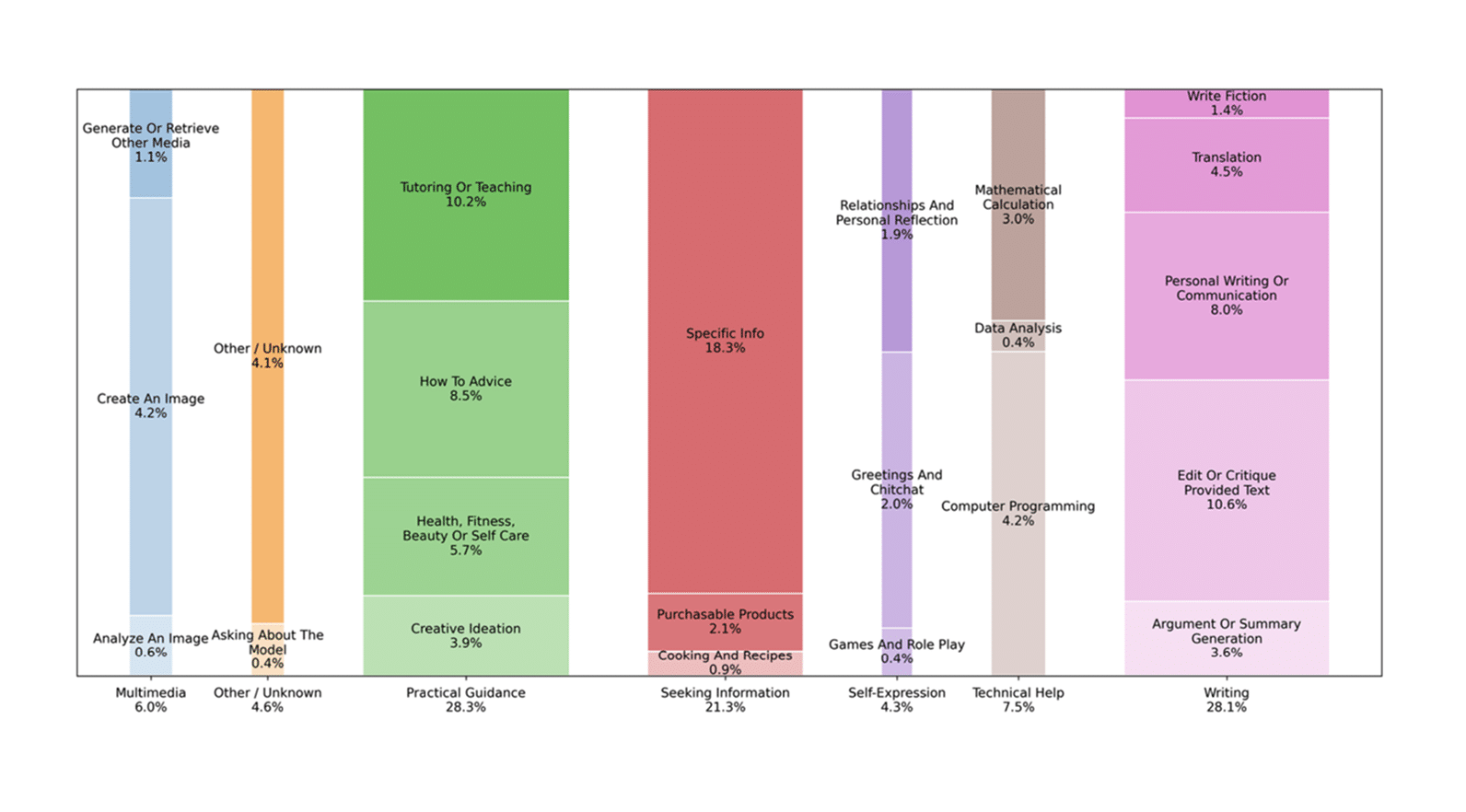
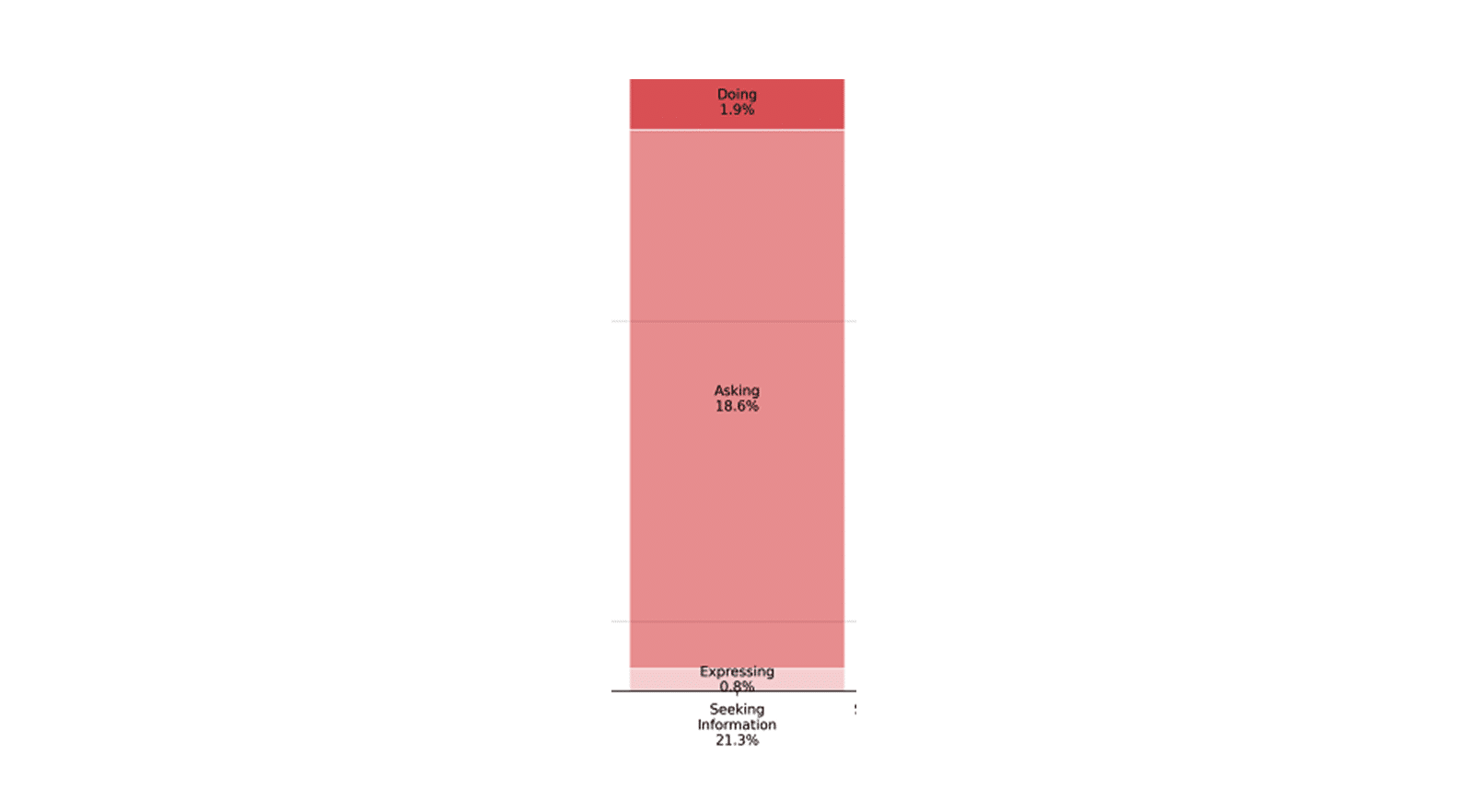
We really see this transition in the “seeking information” section of the chart. Today, “Asking: is still 18.6% and much bigger than the “doing” (making a purchase 1.9%)
We always say it, but now we can actually see that AI agents are genuinely getting better.
Look at the spike of “Good” answers in the below chart. This means that LLMs are getting much smarter and better at understanding what we want and need.
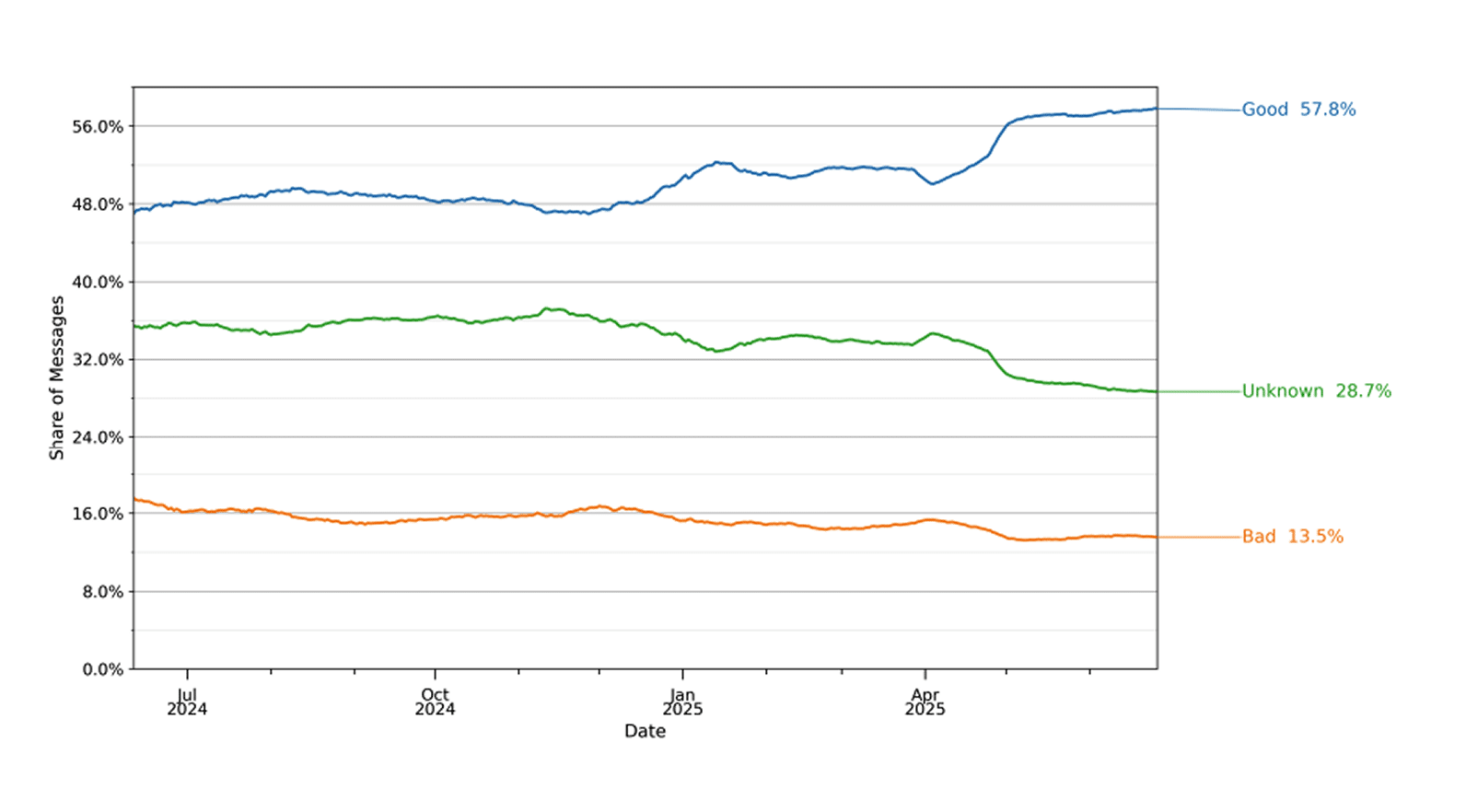
The shift from traditional search-and-click commerce to AI-mediated transactions accelerated dramatically in September 2025, as major tech companies rolled out infrastructure that’s reshaping how consumers discover and purchase products online. Google’s launch of Agent Payments Protocol, OpenAI’s imminent ChatGPT checkout integration, and aggressive moves by Amazon and Shopify signal the emergence of autonomous commerce, where AI agents handle the entire purchase journey from discovery to payment.
But here’s what should really keep you up at night: Sam Altman just announced OpenAI will spend “trillions of dollars” on data centers. That’s not a typo. Trillions. With a T. They’re building infrastructure equivalent to 17 nuclear plants just to keep up with demand.
Why? Because they know what’s coming. And now, so do you.
Forget everything I told you about OpenAI “racing toward” checkout. They just crossed the finish line.
Yesterday, ChatGPT launched Instant Checkout. Not coming soon. Not in beta. Live. Right now. You can buy products directly inside ChatGPT conversations. No clicking out. No new tabs. Just “I want this” → Buy → Done.
The numbers tell the story: Etsy stock shot up 16% within hours. Shopify jumped 6%. Wall Street gets it too. This is the commerce equivalent of Apple launching the App Store.
Here’s what just went live at chatgpt.com/merchants:
The Agentic Commerce Protocol (ACP), co-developed with Stripe, is the language that lets AI and businesses complete transactions. Think of it as the HTTP of AI commerce. It’s open source, works with any payment processor, and if you’re already on Stripe, it takes literally one line of code to implement.
The economics are elegant:
To put this in perspective: Google Shopping charges for clicks that might not convert. Amazon takes 15-45% commission plus dozens of fees. ChatGPT takes ~2% only when you make money. That’s not a tax; that’s a partner.
What’s live today on ChaptGPT:
But here’s what makes this the iPhone moment: 700 million people use ChatGPT weekly, and “a huge portion” are already asking shopping questions. What used to be potential traffic is now actual, intent-driven, ready-to-buy traffic.
Those 50 million daily shopping queries aren’t casually browsing, they’re searching for “best running shoes under $100” or “gift for someone who loves ceramics.” High-intent buyers, already in decision mode.
These are high-intent buyers in decision mode. And now, instead of sending them to your site (where 98% abandon their carts), ChatGPT completes the purchase in-chat.
The implementation leverages everything OpenAI has built: Operator for browser control (fully integrated as of July 17), the shopping experience from April, and now ACP tying it all together. Users with ChatGPT subscriptions can use their card on file. Free users can still buy. Everyone can transact.
This represents a strategic masterstroke for OpenAI, which lost $5 billion in 2024 despite projecting $20 billion in annualized revenue by the end of 2025. A 2% take rate on even a fraction of those 50 million daily shopping queries? That’s real money. Recurring. Growing. Without acquiring a single new user.
For merchants, this changes everything:
The genius move? Making ACP open source. While Google’s AP2 aims to be an industry standard someday, OpenAI just shipped working code. Today. Any developer can implement it. Any merchant can join. The network effects start now.
Here’s where it gets really interesting.
Two weeks ago, Google announced their own protocol, AP2 (Agent Payments Protocol), with 60+ partners including Mastercard, PayPal, and American Express. Two protocols. Two visions. One question: who wins?
Google’s AP2: The Infrastructure Play
Google built AP2 like they’re laying down the payment rails for the entire internet (because they are). It’s comprehensive, secure, and designed to let ANY AI agent spend money safely.
At its core, it’s a system of digital permissions: what an AI can buy, how much it’s allowed to spend, and under what conditions it can act.
Want your AI tracking Taylor Swift tickets and buying the second they drop? AP2 can do that.
OpenAI’s ACP: The “Ship It” Play
While Google was building the perfect protocol, OpenAI did what OpenAI does: ship first, iterate later. ACP launched TODAY with real merchants making real sales. It’s simpler, focused purely on commerce (not general agent payments), and crucially it’s already processing transactions.
Will They Coexist or Will One Win?
Most likely, both survive, but for different reasons:
It’s not winner-take-all. Just like iPhone and Android. Different strengths. Same market. Both huge.
But here’s the twist: Nothing’s stopping merchants from supporting both.
In fact, smart ones will. They’ll use ACP for ChatGPT’s 700 million users and implement AP2 when Google Shopping goes fully agentic. They serve different use cases, and overtime, the protocols might even become interoperable. Stranger things have happened when there’s money to be made.
The real winner will be whoever ships working products first.
Right now, OpenAI is ahead by a mile. Google’s still in the specs and partnerships phase. Meanwhile, Etsy sellers are already making real sales through ChatGPT.
VHS didn’t beat Betamax because it was better. It won because you could actually buy one.
The smartest move? Open sourcing ACP. While Google’s AP2 aims to be an industry standard, OpenAI just released the code. Today. Any developer can build on it. Any merchant can plug in. The network effects start now.
Alright, you’re sold. You want in.
Here’s exactly what you need to do, in order to start right now.
Hour 1-2: Apply and Assess
Step 1: Apply at chatgpt.com/merchants (5 minutes)
Step 2: Audit Your Current Feed (1 hour) You need a product feed that speaks AI. Not SEO. Not Google Shopping. AI. Here’s the brutal truth: if your feed sucks, you’re invisible. OpenAI just released their exact specifications, and they’re non-negotiable.
Step 3: Build Your AI-Ready Product Feed (3-24 hours)
The Non-Negotiables (Required Fields):
The Differentiators (Do These or Lose):
The Format That Works:
Step 4: Optimize for AI Discovery (25-48 Hours)
Make Your Products Quotable.
Instead of “Great shoes,” write “Waterproof trail running shoes with 8mm heel-to-toe drop, ideal for muddy terrain and distances up to 50km.”
AI doesn’t quote vague. It quotes specific.
Structure for Variants:
item_group_id: SHOE123GROUP
item_group_title: Men’s Trail Running Shoes
Then individual variants:
– id: SHOE123-BLK-10, color: Black, size: 10
– id: SHOE123-BLK-11, color: Black, size: 11
The Pricing Strategy:
What Kills Your Visibility:
The Implementation Reality Check
If you’re on Stripe: Literally one line of code enables ACP payments. You could be live tomorrow.
If you’re Not on Stripe: You can still use ACP through Stripe’s Shared Payment Token API without switching processors. Or wait for your processor to support it (they will).
The Feed Refresh Game:
What Success Looks Like
When you nail this, here’s what happens:
The Shortcuts for Speed
Already on Google Merchant Center? Export that feed, add the OpenAI-specific fields (enable_search, enable_checkout), adjust formatting. You’re 80% there.
Using Shopify? Apps are already being built to auto-generate ACP-compliant feeds. By the time you read this, there’s probably one in the app store.
Have a developer? Point them to developers.openai.com/commerce. The documentation is actually good. Like, surprisingly good.
The Bottom Line on Implementation
You don’t need to rebuild your entire eCommerce infrastructure. You need:
That’s it. That’s the entire technical requirement to get your products into 700 million weekly ChatGPT users’ shopping conversations.
While your competitors are forming committees to discuss the implications of AI commerce, you could be live by Tuesday.
I put together a downloadable checklist of this Merchant Playbook to help get you live and selling in 48 hours. You can download it here.
Both Amazon and Shopify announced major AI commerce initiatives within days of each other in mid-September, revealing contrasting approaches to the agent economy.
Amazon’s September launch at their Accelerate conference focused on operational efficiency for existing sellers, while Shopify’s Summer 2025 edition emphasized preparing merchants for AI-driven shopping behaviors.
Amazon’s new agentic AI seller assistant evolved from basic Q&A to a full business partner capable of taking actions with seller permission. Powered by Amazon Bedrock and leveraging Nova and Claude models, the system can generate 70% of product listing content for Amazon’s 1.3 million sellers.
This AI saves sellers up to 60 hours per week by automating tasks like repricing and market analysis,time that translates directly into competitive advantage.
New tools include Enhanced Opportunity Explorer, which analyzes billions of customer interactions to recommend product development, and Creative Studio, which generates professional-quality ads through conversational prompts.
The strategic significance lies in Amazon’s approach to maintaining marketplace dominance as AI transforms discovery. By making their platform more efficient for sellers while keeping transactions within their ecosystem, Amazon aims to insulate itself from external AI shopping agents that might redirect traffic elsewhere.
Shopify’s response focuses on the opposite strategy, preparing merchants for a future where customers shop through external AI agents.
Their updated Sidekick assistant now includes agentic capabilities, voice integration in 20 languages, and built-in image generation. More importantly, Shopify launched the Storefront MCP (Model Context Protocol) integration, allowing external AI agents like Claude or ChatGPT to browse and purchase from Shopify stores naturally.
The timing reveals intense competitive pressure as both companies recognize AI agents will fundamentally alter eCommerce traffic patterns. Amazon’s inward-focused approach leverages their data advantages to optimize existing operations, while Shopify’s outward-looking strategy positions merchants to capture demand from emerging AI-driven channels.
Today’s market reaction says it all.
Etsy up 16%. Shopify up 6%. On a Sunday. That’s billions in market cap added because ChatGPT can now complete purchases.
The market isn’t betting on potential. It’s pricing in what just shipped.
While specific transaction volume projections still vary wildly, from $52.6 billion to $155 billion by 2030, we now have real data points.
Bank of America’s analysis projecting $155 billion by 2030 looks conservative when you consider ChatGPT alone processes 50 million shopping queries daily with 700 million weekly active users.
The infrastructure tells the real story. When Sam Altman says OpenAI will spend “trillions of dollars” on data centers “in the not very distant future,” he’s not talking about building a software company. He’s talking about building utilities.
The 17-gigawatt buildout announced September 23, equivalent to powering 13 million U.S. homes, shows the physical scale required to support AI commerce at scale.
Altman’s honest about the bubble dynamics:
“Are we in a phase where investors as a whole are overexcited about AI? My opinion is yes. Is AI the most important thing to happen in a very long time? My opinion is also yes.”
Smart money knows both can be true.
The convergence of Google’s payment infrastructure, OpenAI’s transactional platform, and major eCommerce players’ agent strategies creates an inflection point for online retail. Brands face a fundamental shift from optimizing for human search behavior to enabling AI agent discovery and purchase automation.
Here’s what every merchant feared: AI would steal their customers, own the relationship, and reduce them to invisible suppliers. OpenAI just did the opposite.
With ACP and Instant Checkout:
ChatGPT is the discovery and transaction layer. Everything else stays yours.
It’s like having the world’s best sales associate who brings customers to your store, helps them decide, processes the payment, then hands you the customer with their receipt.
Compare this to Amazon, where you never see the customer’s email, they control the relationship, and they might knock off your best-sellers. Or Google Shopping, where you bid against yourself just to be seen.
ChatGPT takes a small fee and steps aside.
The paranoid response is,, “What if they change the terms later?”
Fair question. But while the debate plays out, early adopters are already making sales, on terms better than any marketplace has ever offered.
The timeline for widespread adoption isn’t 2030. It’s not even 2026.
It’s today.
The extensive partner coalitions, working code, and live infrastructure prove this isn’t experimental anymore.
Etsy sellers are making sales through ChatGPT conversations as you read this.
The future showed up while we were still debating if it would.
The AI agent economy in commerce isn’t “moving from concept to reality.” It shipped.
Google’s payment protocol provides the trust layer. OpenAI delivered the consumer interface, and it’s live at chatgpt.com/merchants.
Major platforms aren’t “positioning” for agent-mediated traffic; they’re processing it. Etsy sellers woke up this morning to sales from ChatGPT. Shopify merchants will join them this week.
But this isn’t just about technology. It’s about the fundamental unbundling of commerce happening in real-time:
Sam Altman’s trillion-dollar infrastructure bet makes sense now. It’s scaling what’s already working. ChatGPT processes 50 million shopping queries daily. That’s not a test. That’s a market.
The question isn’t whether AI agents will reshape commerce. They did it yesterday at 9am Pacific when Instant Checkout went live.
Here’s your reality check. While you’re reading this, someone just bought something through ChatGPT that could have been from your store. But was it?
If you’re not in the game yet, here’s what you do right now:
The iPhone moment for commerce didn’t just arrive. The App Store is already taking applications.
Your competitors aren’t coming. They’re already there.
If you found this edition of CommerceGPT helpful, share it with a friend who’d benefit too.
– Tomer

“Yotpo is a fundamental part of our recommended tech stack.”
Laura Doonin, Commercial Director




 Join a free demo, personalized to fit your needs