








In the dynamic landscape of eCommerce, trends evolve rapidly. Yet, one principle remains constant: the profound value of a loyal customer. Building a strong base of repeat buyers is not merely an advantage; it is the foundation of sustainable growth. This guide provides a comprehensive analysis of loyalty program marketing for 2026. We will explore everything from the financial impact of customer retention to the practical steps for building, launching, and optimizing a program that converts one-time shoppers into lifelong brand advocates.
Key Takeaways
- Retention is Profitable: Acquiring a new customer can cost five times more than retaining an existing one. Increasing retention by just 5% can boost profits by 25% to 95%.
- Advocates Over Ads: A loyalty program turns customers into brand advocates who provide powerful word-of-mouth marketing, which is often more effective and trustworthy than traditional advertising.
- First-Party Data is Gold: Loyalty programs are a crucial source of first-party data, offering direct insights into the behaviors and preferences of your best customers for deeper personalization.
- Structure Matters: The right program structure (points-based, tiered, VIP, or value-based) depends on your brand, customers, and goals. A hybrid approach can often be most effective.
- Technology is a Partner: Choosing the right technology is about more than software; it’s about finding a strategic partner that provides expertise, flexibility, and robust analytics to drive success.
Why Customer Loyalty is Non-Negotiable for eCommerce Growth
Prioritizing customer loyalty is one of the most strategic decisions an eCommerce brand can make. This approach requires shifting from a purely transactional mindset to building meaningful, long-term relationships. The strategy yields significant dividends in financial stability, brand equity, and invaluable customer insights.
The Hard Numbers: The Financial Impact of Retention
The data consistently shows that retaining customers is substantially more profitable than constantly pursuing new ones. Acquiring a new customer can cost five times more than keeping an existing one. This is because you’ve already done the hard work of earning their trust and their first purchase.
Consider these powerful statistics:
- Increasing customer retention rates by just 5% can increase profits by 25% to 95%.
- The success rate of selling to an existing customer is 60-70%, while the success rate of selling to a new customer is only 5-20%.
- Existing customers are 50% more likely to try new products and spend 31% more, on average, compared to new customers.
These figures underscore the importance of key metrics like Customer Lifetime Value (CLV) and Repeat Purchase Rate. A successful loyalty program directly elevates these indicators, creating a more predictable and profitable revenue stream.
Building a Brand, Not Just a Business
A loyalty program does more than encourage repeat sales; it fosters a sense of community. When customers feel valued beyond their transactional power, they become emotionally invested in your brand. They evolve from simple consumers into passionate brand advocates.
These advocates represent your most powerful marketing asset. They generate authentic word-of-mouth promotion, write glowing reviews, and defend your brand online. This emotional connection is what distinguishes a fleeting business from an enduring brand. It establishes a protective buffer against competitors who can only compete on price.
The Data Advantage: Understanding Your Best Customers
In an era of evolving data privacy regulations, first-party data has become exceptionally valuable. A loyalty program serves as a goldmine for this information, offering direct insight into the behaviors and preferences of your most engaged customers.
With this data, you can:
- Personalize the entire customer journey: From marketing communications to product recommendations, you can customize experiences based on purchase history, reward redemption patterns, and engagement levels.
- Gain deep customer insights: Understand which products resonate most with repeat buyers, their purchasing frequency, and which rewards they find most compelling.
- Create sophisticated segments: Group your customers by loyalty tier, purchase frequency, or CLV to execute highly targeted and effective campaigns.
This data-driven approach enables smarter business decisions, optimizes marketing spending, and forges stronger relationships with the people most critical to your bottom line.
The Anatomy of a Modern Loyalty Program: Key Components & Structures
Not all loyalty programs are structured identically. The best framework depends on your brand, your customers, and your business objectives. Understanding the primary program types is the first step toward designing an effective strategy.
Points-Based Programs: The Classic Approach
This is the most common type of loyalty program due to its simplicity. Customers earn points for specific actions—most notably purchases—and can then redeem those points for rewards.
- How it works: The mechanics are straightforward, such as “spend $1, earn 1 point; earn 100 points, get a $10 discount.” This helps customers grasp the value almost instantly.
- Pros: Its simplicity is its main strength. It is easy to implement and for customers to understand.
- Cons: Without careful management, it can feel purely transactional and may not be enough to foster a deep, emotional connection to the brand.
- Best for: Businesses new to loyalty programs or brands in industries with high purchase frequency, where customers can accumulate points quickly.
Tiered Programs: Gamifying the Experience
Tiered programs create an aspirational journey for customers. Members unlock progressively valuable benefits and a greater sense of exclusivity as their spending or engagement increases.
- How it works: Customers begin in a base tier (e.g., Bronze) and advance to higher tiers (Silver, Gold) by reaching specific milestones, like total spend within a year. Each tier provides better rewards.
- Pros: Tiers introduce a layer of gamification that encourages higher spending. The idea of “leveling up” creates a powerful psychological incentive.
- Cons: These programs can be more complex to design and communicate. You must ensure the value of each tier is significant enough to motivate advancement.
- Best for: Brands with a diverse customer base and varying spending levels. This structure allows you to reward top customers appropriately while engaging new ones.
VIP & Paid Programs: The Ultimate in Exclusivity
Paid loyalty programs, often called VIP programs, require an upfront membership fee in exchange for immediate access to premium, always-on benefits, similar to the Amazon Prime model.
- How it works: Customers pay an annual or monthly fee to join. In return, they might get benefits like free shipping on all orders, a permanent discount, or exclusive access to products.
- Pros: This model cultivates your most committed customer segment. By paying to join, customers show a strong intent to remain loyal. It also generates a predictable, recurring revenue stream.
- Cons: The barrier to entry is high. The value proposition must be exceptionally strong to convince a customer to pay for loyalty.
- Best for: Established brands with a dedicated following and the ability to offer benefits that substantially outweigh the membership cost.
Value-Based & Hybrid Programs: Connecting on a Deeper Level
These programs extend beyond purely transactional rewards. They offer points for non-purchase engagements that align with the brand’s values or strengthen its community.
- How it works: Customers might earn rewards for writing reviews, sharing content on social media, or having the brand make a charitable donation on their behalf.
- Pros: This approach builds a powerful emotional connection. It shows that you value more than just their spending, fostering a genuine, shared-identity community.
- Cons: The direct return on investment (ROI) can be harder to measure compared to a simple points-for-purchase system.
- Best for: Mission-driven brands or companies with a strong focus on community building and user-generated content.
Building Your Loyalty Program Strategy from the Ground Up
A successful loyalty program is the result of deliberate planning. It demands a deep understanding of your customers, clear goals, and a structured approach to ensure its foundation is solid.
Step 1: Define Your Goals and KPIs
Before designing any part of your program, you must define what you want to achieve. Broad goals like “increase loyalty” are not enough. You need specific, measurable targets.
Common goals include:
- Increase Repeat Purchase Rate
- Boost Average Order Value (AOV)
- Grow Customer Lifetime Value (CLV)
- Drive User-Generated Content (UGC)
Once you have a primary goal, establish the Key Performance Indicators (KPIs) you will use to track progress.
Example KPI Checklist:
- Primary Goal: Increase CLV by 15% within 12 months.
- Secondary Goal: Increase product review submissions by 25%.
- Key KPIs to Track: Repeat Purchase Rate, CLV, AOV, Redemption Rate, Enrollment Rate.
Step 2: Understand Your Audience and What They Value
Your loyalty program must center on what your customers value. Don’t guess their preferences; use data to inform your decisions.
- Analyze Purchase Data: Identify your repeat buyers. What do they purchase and how often? Find patterns within your most valuable customer segments.
- Conduct Customer Surveys: Directly ask customers what kinds of rewards they find most motivating. Would they prefer a discount, free shipping, or early product access?
- Create Customer Personas: Develop detailed profiles of your ideal loyal customers. Understanding their motivations will help you design a program that truly resonates.
Step 3: Designing Your Earning and Redeeming Structure
This is the core mechanic of your program. You need to create a balanced system where rewards feel both achievable and valuable.
Earning Actions: Beyond the Purchase
While purchasing is the main way to earn points, an engaging program should reward other valuable actions.
Potential Earning Actions:
- Making a purchase
- Creating an account
- Celebrating a birthday
- Writing a product review
- Following your brand on social media
- Referring a friend
Redemption Options: More Than Just Money Off
Discounts are effective, but they aren’t the only option. A diverse menu of rewards can cater to different preferences.
Potential Rewards:
- Transactional Rewards: Percentage or fixed-amount discounts, free shipping.
- Product Rewards: Free products or samples with an order.
- Experiential Rewards: Early access to new collections or invitations to exclusive events.
- Value-Based Rewards: The option to convert points into a charitable donation.
Step 4: Choosing the Right Technology Partner
A DIY approach with spreadsheets isn’t scalable and quickly becomes an administrative burden. A dedicated loyalty platform is essential for managing members, tracking points, and gathering data. When evaluating technology, you are selecting a partner to help execute your strategy, not just buying software.
Yotpo Loyalty

A successful loyalty program requires more than technology; it demands expertise. Yotpo Loyalty is designed as a strategic partner for eCommerce brands, providing the tools and guidance to build a program that delivers measurable business results. With years of market experience, Yotpo offers a team of loyalty experts and Customer Success Managers who provide strategic guidance tailored to your specific goals.
Yotpo Loyalty offers extensive flexibility and customization, allowing you to create unique, on-brand experiences from on-site modules to the specific rules of your points or tiered program. Its robust and accurate reporting helps you track core KPIs, measure program ROI, and make data-driven decisions for optimization. This is all backed by reliable 24/7 technical support to resolve any issues promptly.
The Power of Synergy
While Yotpo Loyalty is a powerful standalone solution, its effectiveness is amplified when used with Yotpo Reviews. This connection allows you to create a seamless feedback loop by automatically granting loyalty points to customers who submit a review. This not only incentivizes more user-generated content but also communicates that you genuinely value their feedback. Still, it is crucial to recognize that each Yotpo product is engineered to deliver significant results independently.
Launching and Marketing Your Loyalty Program for Maximum Impact
Designing a great loyalty program is only half the battle. A successful launch and consistent, ongoing marketing are critical to driving enrollment and engagement.
Pre-Launch: Building Hype
Begin generating excitement before the program goes live, targeting your most engaged customers first.
- Teaser Campaigns: A few weeks before launch, start dropping hints via email and social media with messages like, “Something special is coming for our best customers.”
- Create a Waitlist: Set up a landing page where interested customers can sign up for early notification. This builds anticipation and provides a highly engaged list to contact on launch day.
The Launch: Making a Splash
Your launch day should be a significant marketing event. Announce the program clearly and confidently across all channels.
- Announce Everywhere: Use a dedicated email blast, homepage banners, a landing page, and social media posts to explain the program’s benefits and how to join.
- Offer a Launch Bonus: Incentivize immediate action. Offer a compelling sign-up bonus, such as free points, to provide instant value and kickstart the member journey.
Post-Launch: Driving Ongoing Engagement
A loyalty program is not a “set it and forget it” initiative. It requires continuous marketing to remain top-of-mind.
- Integrate Loyalty into Every Touchpoint: Include the customer’s point balance in the header or footer of regular marketing emails. Send real-time point balance updates, reward notifications, or tier status changes through your communication channels.
- On-Site Reminders: Display a customer’s point balance when they log into their account. On product pages, include messages like, “Earn 50 points with this item!”
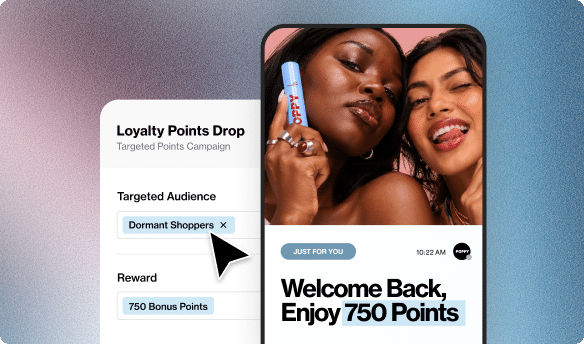
- Run Targeted Campaigns: Use data from your loyalty program to run strategic campaigns. Host bonus point events, run re-engagement campaigns for at-risk members, and encourage members to redeem their points for the first time.
Measuring Success: The KPIs That Matter for Loyalty Marketing
To ensure your loyalty program delivers tangible value, you must track the right metrics. Measuring success goes beyond counting members; it requires analyzing program engagement and its impact on your business goals.
Core Loyalty Metrics
- Enrollment Rate: The percentage of your total customers who have joined the program.
- Redemption Rate: Tracks the percentage of earned points that members redeem. A low rate can signal that rewards lack value.
- Participation Rate: Measures the percentage of members actively earning or redeeming points, separating active members from dormant ones.
Business Impact Metrics
- Repeat Purchase Rate: Compare the repeat purchase rate of loyalty members against that of non-members. A higher rate for members shows the program is working.
- Average Order Value (AOV): Are loyalty members spending more per transaction than non-members?
- Purchase Frequency: How often are members returning to buy? A successful program should shorten the time between purchases.
- Customer Lifetime Value (CLV): This is the ultimate measure. By tracking the CLV of members versus non-members, you can quantify the program’s long-term financial impact.
The Future of Loyalty: Trends to Watch in 2026 and Beyond
The world of customer loyalty is always evolving. As customer expectations rise, loyalty programs are becoming more sophisticated, personalized, and integrated.
- Hyper-Personalization at Scale: The future lies in delivering personalized experiences. Powered by AI, modern platforms can analyze a customer’s entire history to offer unique, individualized rewards.
- Experiential and Non-Monetary Rewards: Customers increasingly seek rewards that offer more than monetary value, such as exclusive access to new products, VIP experiences, or personalized services.
- The Rise of Paid Loyalty Programs: More brands are finding that their most dedicated customers are willing to pay a membership fee for a premium experience, creating a recurring revenue stream and a highly engaged customer segment.
- Seamless Omnichannel Integration: Customers expect a seamless experience whether they shop online or in-store. A loyalty program must reflect this, allowing members to earn and redeem points consistently across all channels.
Conclusion: Your Loyalty Program is Your Greatest Asset
In the competitive landscape of 2026, your most sustainable advantage is your relationship with your customers. A well-designed, strategically executed loyalty program is no longer a peripheral marketing tactic; it is a core business asset.
It functions as your engine for driving retention, maximizing customer lifetime value, and building a brand that consumers feel a genuine connection with. By investing in a data-driven strategy, you can cultivate a thriving community of advocates who will champion your brand and secure its future growth.
Frequently Asked Questions
How do I choose a name for my loyalty program?
Choose a name that reflects your brand’s personality and the program’s value. Keep it simple, memorable, and creative. Words like “Club,” “Circle,” “Collective,” or “Rewards” are common starting points. Make sure it aligns with the overall experience you want to create for your members.
What’s the difference between a loyalty program and a rewards program?
While often used interchangeably, a loyalty program is a broader strategy focused on building a long-term emotional connection and retaining customers. A rewards program is a tactic within that strategy, representing the specific structure of points, discounts, and other perks offered.
Should my loyalty program be free or paid?
For most brands, a free program is the best way to maximize enrollment and engagement. A paid (or VIP) program is better suited for established brands with a highly dedicated customer base that can support a premium, high-value set of instant benefits that justify the cost.
How can I promote my new loyalty program?
Promote it everywhere. Announce it with a dedicated email campaign, homepage banners, social media posts, and on post-purchase pages. Offer a sign-up bonus to drive immediate enrollment and create a dedicated landing page that serves as a central hub for all program information.
What are some non-transactional ways to reward customers?
Reward customers for actions that build community and provide value, such as writing product reviews, sharing user-generated content, following on social media, or referring friends. This shows you value their engagement beyond just their purchases.
How do I prevent loyalty program fraud?
Implement rules to prevent abuse, such as limiting the number of referrals from a single IP address, setting a cap on points earned for non-purchase activities, and monitoring for suspicious account behavior. A robust loyalty platform will have built-in tools to help manage this.
Can a B2B company benefit from a loyalty program?
Absolutely. B2B loyalty programs can be very effective for encouraging repeat business from clients, building stronger relationships, and differentiating from competitors. Rewards might include service credits, exclusive access to industry reports, or invitations to special events.
What role does personalization play in a loyalty program?
Personalization is key to making members feel valued. Use data to offer birthday rewards, recommend products based on past purchases, and create targeted promotions for different customer segments. The more personal the experience, the stronger the connection.
How do I re-engage inactive loyalty members?
Use segmentation to identify members who haven’t earned or redeemed points in a while. Send them a targeted email reminding them of their point balance and consider offering a small point bonus or a special offer to encourage them to come back and engage.
What’s the best way to handle expiring points?
If you implement point expiration, communication is critical. Give members plenty of notice (e.g., 90, 60, and 30 days out) before their points expire. This creates a sense of urgency and encourages redemption rather than creating a negative experience.
Should I offer surprise and delight rewards?
Yes. Unexpected rewards are a powerful tool for creating memorable experiences and fostering a deep emotional connection. Surprise your top-tier members with a free product, grant a random point bonus, or offer an unexpected upgrade.
How does a loyalty program fit into a broader retention strategy?
A loyalty program is a central pillar of a retention strategy, but it works best alongside other efforts like excellent customer service, personalized email marketing, and a high-quality product. It provides the structure to formally recognize and reward the repeat behaviors you want to encourage.
How can I get feedback on my loyalty program?
Ask your members directly. Send out surveys asking what they like, what they don’t, and what rewards they’d like to see in the future. Analyze redemption data to see which rewards are most popular. Use this feedback to continuously optimize and improve the program.











 Join a free demo, personalized to fit your needs