








Choosing the right customer loyalty program software is a strategic decision that can define your brand’s future. In a competitive eCommerce landscape, attracting new customers costs significantly more than retaining existing ones. A well-executed loyalty program is your most powerful tool for building lasting relationships, increasing customer lifetime value, and creating a community of brand advocates.
This guide provides a comprehensive framework to help you select the ideal loyalty software for your business, ensuring you choose a partner, not just a platform.
Key Takeaways
- Strategy First: Before evaluating any software, define clear, measurable goals for your loyalty program, such as increasing repeat purchase rates or average order value (AOV).
- Essential Features are Key: Your software must offer flexibility in earning and redemption, deep branding customization, powerful customer segmentation, and clear, actionable analytics.
- Look for a Partner, Not Just a Tool: The best providers offer strategic support with dedicated experts who help you design, launch, and optimize your program for maximum ROI.
- Evaluate Provider Maturity: Choose a scalable platform from an experienced company that can grow with your brand and understands the nuances of the eCommerce landscape.
- Consider Synergies: While your loyalty software should be powerful on its own, consider how it can work with other best-in-class tools, like a reviews platform, to enhance your overall marketing efforts.
Why a Customer Loyalty Program is Non-Negotiable for eCommerce Growth
Before diving into software features, it’s essential to establish why a loyalty program is a fundamental pillar of sustainable growth. The data consistently shows that focusing on your existing customer base yields a far greater return than constantly pursuing new leads. This approach is about working smarter, not just harder.
The Hard Numbers: The ROI of Customer Retention
The business case for customer loyalty is clear. Loyal customers simply spend more, more often.
- Increased Customer Lifetime Value (LTV): A loyalty program directly encourages repeat purchases, which is the fastest way to increase the total revenue a customer generates for your brand over their lifetime.
- Higher Average Order Value (AOV): When customers have points to spend or are close to reaching a new reward tier, they are often motivated to add more items to their cart. This behavior directly boosts your AOV.
- Improved Purchase Frequency: Loyalty programs keep your brand top-of-mind. Regular reminders about points balances, exclusive rewards, and upcoming tier benefits give customers compelling reasons to return and shop again sooner.
- Cost-Effectiveness: Acquiring a new customer can be 5 to 25 times more expensive than retaining an existing one. Investing in a loyalty program is an investment in a more profitable, stable business model.
Beyond Transactions: Building a Brand Community
While the financial benefits are compelling, the true power of a loyalty program lies in its ability to foster an emotional connection with your customers. A transactional relationship is fragile; if a competitor offers a lower price, you might lose that customer.
An emotional connection, however, builds a protective moat around your business. When customers feel valued, recognized, and part of a community, they become genuine brand advocates. They don’t just buy your products; they believe in your brand. They are more likely to leave positive reviews, recommend you to friends and family, and defend your brand online. This creates a powerful, self-sustaining marketing engine fueled by authentic social proof.
In essence, a modern loyalty program transcends simple discounts. It’s a sophisticated marketing tool designed to drive key business metrics while transforming casual shoppers into a loyal community.
The Foundation: Defining Your Loyalty Program Strategy
Evaluating software without a clear strategy is like setting sail without a map. You might find a tool with impressive features, but if it doesn’t align with your specific business goals, it won’t deliver the results you need. Before you assess a single platform, you must first define what you want to achieve.
Step 1: Set Clear, Measurable Goals
What does success look like for your brand? Your loyalty program’s objectives should be specific, measurable, achievable, relevant, and time-bound (SMART). Vague goals like “increase loyalty” aren’t effective. Instead, focus on concrete business outcomes.
Checklist for Setting Loyalty Program Goals:
- Increase Repeat Purchase Rate: Example: “Increase our repeat purchase rate from 20% to 28% within 12 months.”
- Boost Average Order Value (AOV): Example: “Increase AOV by 15% for program members in the next six months.”
- Improve Customer Lifetime Value (LTV): Example: “Increase LTV by 25% over the next two years.”
- Drive User-Generated Content (UGC): Example: “Double the number of product reviews collected each month.”
- Grow Your Subscriber List: Example: “Increase our marketable subscriber list by 30% through loyalty program sign-ups.”
- Encourage Referrals: Example: “Generate 500 new customers through member referrals this year.”
Defining these goals will serve as your North Star, guiding every decision you make during the software selection process.
Step 2: Understand Your Customers
Who are you trying to build loyalty with? Different customer segments are motivated by different factors. A deep understanding of your audience is critical to designing a program that resonates.
- Analyze Your Data: Examine your existing customer data. Who are your most valuable customers (your VIPs)? What are their buying habits? How often do they purchase? What products do they prefer? Identifying these patterns will help you structure your rewards.
- Consider Motivations: Are your customers primarily price-sensitive, making discounts and cashback most appealing? Or are they driven by a desire for exclusivity, making tiered perks and early access to new products more effective? Perhaps they are value-aligned and would appreciate opportunities to donate points to a charity.
- Gather Feedback: If you’re unsure, ask. Use surveys or polls to ask your customers what kind of rewards they would find most valuable. This direct feedback is invaluable for shaping an effective program.
Step 3: Choose Your Loyalty Program Model
With your goals and customer insights in hand, you can now choose the right structure for your program. Most loyalty programs fall into one of these categories, though many successful brands use a hybrid approach.
- Points-Based Programs: This is the most common model. Customers earn points for specific actions (making a purchase, leaving a review, following on social media) and can redeem those points for rewards like discounts or free products. It’s simple, intuitive, and effective.
- Tiered Programs: This model gamifies the loyalty experience. Customers unlock new levels of status and benefits as they spend more. Tiers create a sense of aspiration and exclusivity, motivating customers to increase their engagement to reach the next level (e.g., Bronze, Silver, Gold).
- Value-Based Programs: This program type connects with customers on a deeper level by aligning with their values. For every purchase, the brand might make a donation to a specific charity. This builds strong emotional loyalty among customers who share those values.
- Hybrid Programs: Many of the most successful programs combine elements from different models. For example, a tiered program that uses points as the mechanism for moving between tiers and redeeming rewards offers both simplicity and aspiration.
Defining your strategy first is a critical step. It transforms your search from a confusing feature comparison into a focused evaluation of which software can best help you achieve your business objectives.
The Core Checklist: Essential Features for Loyalty Program Software
Once you have a solid strategy, you can begin evaluating software. A powerful loyalty platform is more than just a point tracker; it’s a flexible, data-driven engine for building customer relationships. Here are the essential features you should look for.
Earning & Redemption Flexibility
A uniform approach to rewards will fail to engage your diverse customer base. Your software must allow you to create a wide variety of ways for customers to earn and redeem points, keeping the program interesting and valuable.
Key Earning Campaign Capabilities:
- Purchases (e.g., 1 point for every $1 spent)
- Account Creation
- Social Engagement (following, sharing)
- Writing Product Reviews
- Birthdays & Anniversaries
- Custom actions unique to your brand
Key Redemption Options:
- Percentage or fixed-amount discounts
- Free shipping vouchers
- Free products
- Flexible point expiration methods
Yotpo Spotlight: Strategic and Flexible Rewards
This is an area where a dedicated loyalty solution truly excels. Yotpo Loyalty is built with the understanding that strategic rewards are key to driving specific behaviors. The platform offers extensive flexibility, allowing you to design a wide range of earning campaigns that go far beyond simple points-per-dollar.

You can incentivize high-value actions like leaving photo reviews or reaching a higher spending tier. This ensures your program isn’t just rewarding purchases but actively helping you achieve your core business goals, like gathering more UGC or increasing AOV.
Program Customization and Branding
Your loyalty program should feel like a natural extension of your brand, not a generic, third-party add-on. A clunky or off-brand user experience can erode trust and diminish the program’s effectiveness.
Look for software that offers deep customization options:
- On-Site Widgets: The ability to embed fully customizable modules on your homepage, product pages, and a dedicated loyalty landing page.
- Branded Communications: All emails and notifications related to the program should be fully editable to match your brand’s voice and visual identity.
- Headless Capabilities: For brands with custom-built storefronts, the ability to use APIs to create a completely unique loyalty experience is crucial.
Yotpo Spotlight: A Seamless, On-Brand Experience
Yotpo Loyalty provides powerful tools to ensure your program is perfectly integrated into your site’s look and feel. With a user-friendly editor, you can easily customize on-site modules and program pages without needing a developer.
This ensures the entire customer journey, from earning points to redeeming rewards, reinforces your brand identity and provides a seamless, trustworthy experience for your members.
Robust Segmentation and Personalization
In today’s market, personalization is an expectation. Your loyalty software must be able to segment your members based on their data and deliver personalized experiences.
Key segmentation criteria include:
- VIP Tiers
- Points Balance
- Purchase History
- Customer Attributes (location, birthday, etc.)
Yotpo Spotlight: Dynamic Segmentation for Personalized Offers
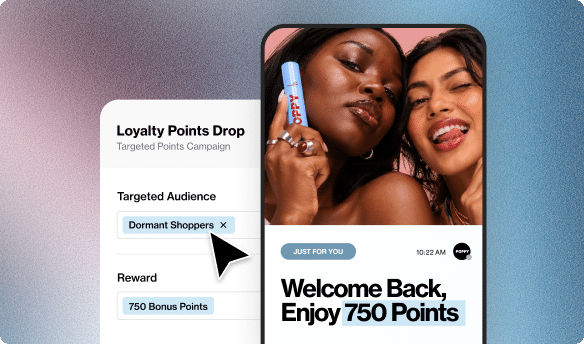
Yotpo Loyalty excels at leveraging customer data for personalization. The platform’s dynamic segmentation capabilities allow you to create highly targeted groups based on dozens of attributes. This allows you to run campaigns like offering double points to at-risk customers or providing exclusive early access to new products for your top VIP tier, making each member feel uniquely valued.
Reporting and Analytics
You can’t optimize what you can’t measure. Your loyalty software must provide clear, actionable insights into program performance. A simple list of members isn’t enough.
Look for a platform with a comprehensive analytics dashboard that tracks key performance indicators (KPIs) like:
- Program ROI
- Member Engagement Rate
- Redemption Rate
- LTV of Members vs. Non-Members
Yotpo Spotlight: Accurate Reporting for Strategic Decisions
A key differentiator for Yotpo Loyalty is its focus on robust and accurate reporting. The platform provides a clear, intuitive dashboard that makes it easy to track your most important metrics and demonstrate the program’s ROI. This data-driven approach empowers you to make informed decisions and continuously optimize your strategy for maximum impact.
Strategic Support and Partnership
Launching a loyalty program isn’t a “set it and forget it” task. To achieve the best results, you need a partner who can provide strategic guidance based on experience with thousands of eCommerce brands.
Look for providers that offer:
- Dedicated Customer Success Managers (CSMs)
- Strategic guidance on program design and optimization
- Reliable technical support
Yotpo Spotlight: A Partnership Approach to Growth
This is perhaps one of the most significant advantages of choosing Yotpo Loyalty. Yotpo operates on a partnership model, providing clients with dedicated eCommerce loyalty experts. From initial strategy and design to launch and ongoing optimization, these dedicated CSMs offer proactive, data-backed advice to ensure your program is a success. This level of strategic support is a powerful differentiator from self-service tools.
The Integration Factor: Amplifying Your Marketing Stack
A loyalty program is incredibly powerful on its own. When it works in tandem with the rest of your marketing channels, its value multiplies. Siloed tools that don’t communicate with each other create a disconnected customer experience and leave potential revenue on the table.
Your loyalty data—a customer’s VIP tier, points balance, and reward eligibility—is some of the most powerful information you have for personalization. When your other marketing tools can access this data, you can create hyper-personalized campaigns that drive action.
For example, your most loyal customers are often your biggest advocates. A best-in-class loyalty solution should be able to connect with a best-in-class reviews solution. This synergy, possible with the integration between Yotpo Loyalty and Yotpo Reviews, creates a virtuous cycle. You can automatically reward customers with loyalty points for leaving a product review, and even offer more points for higher-value contributions, like a photo or video review. This encourages the creation of authentic user-generated content, which in turn drives new customers.

While a powerful solution like Yotpo Loyalty is designed to deliver significant results as a standalone product, it’s also designed to enhance your broader strategy. When choosing software, don’t just ask, “What can this loyalty tool do?” Ask, “How can this loyalty tool enhance my entire marketing strategy?”
Navigating the Market: Evaluating Loyalty Software Providers
The market for loyalty software is crowded. You will find a range of providers, from simple apps to sophisticated platforms. Some names you might encounter include Yotpo, Loyalty Lion, Smile, Rivo, Stamped, and Okendo. While these tools address aspects of loyalty, it’s crucial to look beyond a basic feature checklist and evaluate the provider as a whole.
Looking Beyond the Feature List
A successful loyalty program depends on more than just software; it depends on the company behind it.
- Company Experience and Market Maturity: How long has the company been specializing in loyalty? A provider with deep experience has likely solved a wide range of challenges. Yotpo, for instance, has demonstrated market maturity and experience in the loyalty space since 2016, offering a level of expertise that newer players may not possess.
- Scalability: Choose a platform that can grow with you. Will the software handle your needs when you have 10,000 members? 100,000? A million?
- Technical Support and Strategic Guidance: This is a critical differentiator. When you have a question or an issue, how quickly can you get help from someone knowledgeable? A provider that offers a dedicated CSM and 24/7 technical support, like Yotpo, makes a clear statement about its commitment to your success.
Understanding the Competitive Landscape
When you evaluate different providers, frame your comparison around the strategic pillars that truly drive success.
Use this framework for your evaluation:
- Strategic Partnership vs. Self-Service Tool: Are you looking for a tool that you must manage on your own, or a strategic partner who will provide expert guidance to help you maximize your ROI?
- Deep Customization vs. Template-Based Systems: Do you want your loyalty program to be a seamless, branded experience, or are you comfortable with a more generic, template-based look and feel?
- Powerful Standalone vs. Simple Point Solution: Does the software offer a deep, robust feature set that delivers value on its own, or is it a simple tool with limited capabilities?
By focusing on these core principles, you can cut through the marketing noise and identify the providers that are truly equipped to be long-term partners in your brand’s growth.
A Step-by-Step Framework for Making Your Final Decision
You’ve completed the strategic work and you know what to look for. Now it’s time to make a decision. Follow this structured process to choose with confidence.
Step 1: Create an Internal Requirements Document
Consolidate all your work into a single document. It should include your goals, target customer overview, chosen program model, and a checklist of “must-have” vs. “nice-to-have” features.
Step 2: Shortlist 3-5 Providers
Based on your requirements and initial research, create a shortlist of the providers that seem to be the best fit.
Step 3: Schedule Demos
This is your chance to see the software in action. Lead the demo. Use your requirements document to ask specific questions:
- “Show me exactly how I would set up a campaign to reward customers for leaving a photo review.”
- “Can you demonstrate how your segmentation tool would allow me to target VIPs who haven’t purchased in 60 days?”
- “Walk me through your analytics dashboard. How do I track the ROI of the program?”
- “What does the onboarding process look like, and who will be my main point of contact?”
Step 4: Check Customer Reviews and Case Studies
Look for reviews from companies that are similar to yours in size and industry. What do real customers say about the software’s reliability, the quality of customer support, and the results they’ve achieved?
Step 5: Make a Data-Informed Choice
Review your notes from the demos, your requirements document, and the pricing proposals. The best choice is the provider that not only meets your technical requirements but also gives you the most confidence that they will be a true partner in helping you achieve your business goals.
Conclusion: Your Loyalty Program is Your Greatest Retention Asset
Choosing a customer loyalty program software is one of the most important decisions you will make for the long-term health of your eCommerce brand. By moving beyond a simple feature comparison and focusing on strategic alignment, powerful features, and the value of a true partnership, you can select a solution that does more than just award points. You can build a powerful engine for customer retention that increases lifetime value, fosters a thriving brand community, and creates a sustainable competitive advantage for years to come.
Frequently Asked Questions
How much does a loyalty program cost?
The cost can vary widely, from under a hundred dollars a month for basic apps to thousands for enterprise platforms. Pricing is often based on your number of orders or members. It’s important to view the cost not as an expense, but as an investment, and evaluate it against the potential ROI in terms of increased LTV and retention.
How long does it take to see ROI from a loyalty program?
While you can see engagement like sign-ups almost immediately, a measurable financial ROI typically takes 3-6 months to become clear. This is when members begin to actively redeem rewards and change their purchasing behavior, impacting metrics like repeat purchase rate and AOV.
Can a loyalty program work for a small business?
Certainly. A loyalty program is a powerful tool for businesses of all sizes. For small businesses, it can be a particularly effective way to compete against larger retailers by building strong personal relationships with a core group of customers. The key is to choose a scalable platform that can start simple and grow with you.
What’s the difference between a loyalty program and a referral program?
A loyalty program focuses on retaining existing customers by rewarding them for their own engagement. A referral program is an acquisition tool that incentivizes existing customers to bring in new ones. Many of the best loyalty platforms, including Yotpo Loyalty, include referral capabilities, allowing you to manage both in one system.
How do I measure the success of my loyalty program?
Success should be measured against the specific goals you set initially. Key metrics to track in your software’s analytics dashboard include Customer Retention Rate, Repeat Purchase Rate, Average Order Value (AOV), Program ROI, and Redemption Rate.
What are the most common mistakes when launching a loyalty program?
The biggest mistakes include having an overly complex earning structure, offering rewards that aren’t valuable to customers, poor on-site promotion, and failing to communicate with members about their benefits. A good software partner can help you avoid these pitfalls.
How important is customization for a loyalty program’s success?
It’s critical. Your loyalty program should look and feel like a core part of your brand, not a generic add-on. Deep customization of widgets, pages, and emails builds trust and creates a seamless experience, which directly impacts member engagement and program effectiveness.
Should my loyalty program be points-based or tiered?
It depends on your goals. Points-based systems are simple and effective for driving immediate actions. Tiered programs are excellent for building long-term aspiration and making your best customers feel special. Many successful brands use a hybrid model, using points as the currency within a tiered structure.
How can I promote my new loyalty program to customers?
Promote it everywhere! Announce the launch via an email campaign and on social media. Use on-site banners and pop-ups to drive sign-ups. Ensure there’s a clear link to a dedicated loyalty landing page in your site’s header or footer. Continuous promotion is key to driving enrollment.
How do I keep my loyalty program exciting over time?
Keep it fresh by introducing new ways to earn points, offering limited-time “double points” events, and adding new, exclusive rewards. Use segmentation to send personalized offers to different member groups. A static program can become stale, so continuous iteration is important.
What are “experiential rewards” and should I offer them?
Experiential rewards are non-monetary perks like early access to new products, invitations to exclusive events, or a personal styling session. They are incredibly effective at building an emotional connection with your brand and making your top customers feel truly valued.
What is the role of a Customer Success Manager (CSM)?
A CSM is a strategic partner provided by your software company. Their job is to help you succeed. They provide expert advice on your program’s strategy, help you analyze performance data, and suggest optimizations to ensure you’re getting the maximum possible ROI from the software.
How does a loyalty program help with data collection?
A loyalty program is a powerful tool for gathering zero-party data. By rewarding customers for actions like completing a profile, sharing their birthday, or indicating product preferences, you can collect valuable information that allows for deeper personalization across all your marketing efforts.











 Join a free demo, personalized to fit your needs