








Think about the last time you bought a new product online—maybe a pair of running shoes or a high-end coffee maker. You couldn’t physically pick it up, test the weight, feel the material, or taste the coffee. You were essentially asked to trade your hard-earned money for a few high-resolution photos and a paragraph of marketing copy.
That moment of hesitation you felt? That is the “Trust Gap.”
It is the single biggest barrier to conversion for any modern e-commerce brand. In a physical store, the product sells itself through touch and trial. Online, the product must be sold through the experiences of others. Shoppers bridge this gap by looking for social proof—validation from people just like them who have already taken the leap.
For growing Direct-to-Consumer (DTC) brands, the operational reality of trying to collect product reviews to fill this gap is often messy. In the early days, a founder might manually email the first 50 customers. It feels personal and manageable. But what happens at order 500? Or 5,000? Spreadsheets break, follow-ups are forgotten, and timing becomes inconsistent. You end up with a “leaky bucket” where thousands of happy customers experience your brand, but only a tiny fraction leave the feedback necessary to convince the next wave of buyers.
This guide moves beyond the basics to provide a comprehensive masterclass. We will explore the behavioral psychology behind why customers write reviews, the technical “waterfall” strategies for implementation, the rise of AI in search, and the specific tools you need to build an automated engine that doesn’t just gather feedback, but actively drives revenue.
Key Takeaways: Best Strategies to Collect Product Reviews
- Automation is Non-Negotiable: As order volume scales, manual outreach becomes mathematically impossible. Automated systems ensure you collect product reviews with 100% coverage, triggering requests at the precise moment of highest customer satisfaction.
- Quality Over Quantity: While star ratings matter, visual content drives conversion. Product pages with User-Generated Content (UGC) see a 161% lift in conversion compared to those without.
- Friction is the Enemy: With mobile commerce dominating retail, you must utilize “in-mail” AMP technology. This allows customers to rate and write their review without ever leaving their email client, drastically increasing submission rates.
- The “Delivery” Trigger: Never trigger requests based on “order date.” Advanced systems trigger based on “carrier delivery date” plus a specific “time-to-value” delay (e.g., 21 days for supplements vs. 4 days for apparel).
- Zero-Party Data: Leverage the review request form to ask fit and preference questions (e.g., “Skin Type: Oily”). This transforms the process to collect product reviews into a powerful data segmentation engine for future marketing.
- The Loyalty Loop: Replace cash incentives with loyalty points. This ensures compliance with FTC guidelines while psychologically committing the customer to a future purchase.
- SEO has Evolved to GEO: Modern search engines use AI. Fresh, detailed reviews provide the unique content needed to rank in AI Overviews, a strategy known as Generative Engine Optimization (GEO).
The Strategic Imperative of Automation
Many emerging brands begin their journey to collect product reviews with good intentions but poor infrastructure. The “manual trap” is deceptive. It works when you have ten orders a week. You can check the tracking numbers, wait for delivery, and send a personal note.
However, as you scale, this manual process becomes an operational bottleneck. You miss the critical window of excitement. You forget to follow up with the customer who didn’t open the first email. You fail to tag the photos properly for your website gallery. If you are still sending one-off emails via a standard Email Service Provider (ESP) or simply “hoping” customers will return to your site to leave a review, you are leaving significant revenue on the table.
Automation is not a luxury feature for enterprise giants; it is the foundational plumbing of the modern revenue stack.
Strategy 1: The Consistency Engine and the “Recency” Factor
The primary failure point of manual collection is human error and inconsistency. An automated system works 24/7/365. It doesn’t take weekends off, it doesn’t get sick, and it doesn’t forget to check the delivery status. It ensures that every single customer, regardless of when they bought or what they bought, receives a polished, timely request.
This consistency builds a predictable flow of fresh content, which is crucial because “Recency” is a major conversion factor.
Imagine a shopper lands on your page. They see a 5-star rating. Great. Then they filter by “Newest.” If the most recent review is from November 2022, their trust evaporates. They immediately wonder: Has the manufacturing changed? Is this company still in business? Is this product ‘dead’?
To the modern consumer, an old review is almost as bad as no review. Automation ensures your product pages are alive, signaling to the 46% of consumers who specifically look for recent activity that the brand is thriving and the product quality is current.
Strategy 2: Mastering the “Time-to-Value” Window
Timing is the single most critical variable when you collect product reviews, yet it is the most difficult to get right manually. You are trying to hit a moving target: the “Time-to-Value” window.
This is the specific period where the customer has received the product, used it enough to appreciate its benefits, but the initial dopamine rush of the unboxing hasn’t yet faded.
- The “Too Early” Mistake: Asking before the package arrives is the cardinal sin of review collection. It confuses the customer (“I haven’t got it yet”) and often results in a 1-star review complaining about shipping delays rather than assessing the product itself.
- The “Too Late” Mistake: Asking two months later results in apathy. The excitement is gone, the box is recycled, and the product has become a mundane part of their daily life. The urgency to share their opinion has vanished.
- The Automated Solution: Best-in-class automation solves this by integrating directly with shipping carriers (FedEx, USPS, DHL, UPS). The system triggers the “countdown” only when the carrier API returns a specific status of “Delivered.” This level of precision—waiting exactly 5 days after the package hits the doorstep—is impossible to achieve manually at scale.
Strategy 3: Scaling Personalization with Dynamic Data
You cannot manually write 5,000 personal emails a month. However, consumers today expect personalization; generic “Dear Customer” emails are deleted instantly.
Automation allows you to use dynamic tags to insert the customer’s first name, the specific image of the product they bought (not just a generic logo), and tailored questions into the email at scale. When a customer sees their specific item in the email body, the brain recognizes it immediately, increasing open and click-through rates.
“The goal of automation isn’t just efficiency; it’s retention. By connecting your review requests to your loyalty program, you turn a transactional moment—asking for feedback—into a relational moment that rewards the customer and brings them back for their next purchase.” — Ben Salomon, E-commerce Expert & Growth Marketing Manager at Yotpo
The Anatomy of a High-Converting Review
Before building the collection engine, we must define the fuel. Many merchants make the mistake of optimizing their strategy purely for “Stars.” While a high star rating is necessary to get a shopper’s attention, it is not sufficient to close the sale. To drive conversion, you need “High-Impact Reviews.”
The Psychology of Specificity
Shoppers have evolved. They are digitally savvy and can spot a fake or low-effort review (“Great item!”, “Nice shipping”) from a mile away. These reviews offer zero value to a hesitant buyer who is on the fence.
A high-converting review contains specificity and context. It answers the question: “Will this work for ME?”
Consider the difference between these two reviews:
- Low Impact: “Good shirt. Liked it.”
- High Impact: “I’m 6’1″ and usually struggle with sleeve length. This Large Tall fits perfectly, and the fabric didn’t shrink after the first wash.”
The second review is a sales weapon. It identifies the user (tall), states a specific objection (sleeve length), and validates the quality (didn’t shrink). This is the content that sells. When you set up your system to collect product reviews, your prompts must be designed to extract this specific information, asking questions like “How was the fit?” rather than just “How was your experience?”
The Power of Visual Proof (UGC)
User-Generated Content (UGC)—photos and videos taken by customers—is the ultimate trust signal. Professional studio photography creates desire; customer photography creates trust.
- Fashion: Real photos show how fabric drapes on non-model body types.
- Home Goods: Real photos show scale and color in average lighting conditions, not perfect studio lighting.
- Beauty: Before-and-after photos provide irrefutable proof of efficacy that no amount of marketing copy can replicate.
Data shows that adding customer photos can drive a 137% lift in purchase likelihood. Your automation strategy must prioritize the collection of visual assets over text-only reviews, typically by offering higher incentives (more loyalty points) for media-rich feedback.
The Paradox of Perfection
Do not fear negative reviews. Research suggests that purchase likelihood typically peaks at ratings in the 4.2 to 4.7 range, rather than a perfect 5.0.
A perfect score with hundreds of reviews and zero negative feedback is perceived as “too good to be true” or censored. A healthy mix of reviews, where a customer might complain about something minor (e.g., “shipping took 5 days instead of 3”), actually validates the authenticity of the positive reviews. It proves you aren’t hiding anything.
Step-by-Step Guide to Collect Product Reviews on Autopilot
Here is the technical and strategic blueprint for constructing a best-in-class collection system.
Strategy 4: Channel Selection & The Multi-Channel Waterfall
In 2026, relying on a single channel is a liability. You must meet customers where they are.
- Email (The Workhorse): Email remains the primary channel to collect product reviews because it offers the canvas space needed for product images, dynamic questions, and brand storytelling. It is non-intrusive and allows the customer to respond on their own time.
- SMS (The Accelerator): SMS is a high-velocity channel. With SMS open rates often exceeding 90%, it ensures visibility. SMS review requests can drive 66% higher conversion than email requests. However, it must be used sparingly to avoid “alert fatigue.”
The Winning Strategy: The Waterfall Flow Do not blast both channels simultaneously. Use a logic-based “waterfall” flow to maximize conversion while minimizing cost and annoyance:
- Trigger: System detects package status “Delivered.”
- Wait: Apply “Category Delay” (e.g., 5 days).
- Action 1: Send Email Request (Rich HTML with In-Mail Form).
- Wait: 3-5 Days.
- Check: Did they leave a review?
- Yes: Stop flow. Trigger “Thank You” email with loyalty points balance.
- No: Action 2: Send SMS Reminder. This should be a short, punchy text sent via your SMS integration (e.g., Klaviyo or Attentive).
This approach maximizes coverage. The email catches the majority, and the SMS acts as a “nudge” for the busy customers who missed the inbox notification.
Strategy 5: Friction Reduction & In-Mail Technology
The biggest barrier to collecting reviews is “click fatigue.” In the traditional model, the user flow is arduous:
- Old Way: Open email -> Click link -> Wait for browser to load -> Login to store (often forgotten password) -> Find form -> Type review.
- Result: High drop-off at every step.
The Solution: AMP Technology Best-in-class platforms utilize AMP (Accelerated Mobile Pages) for email technology. This allows you to embed the entire review form—star rating, text box, and submit button—directly within the email body.
- New Way: Open email -> Tap stars -> Type review -> Hit submit.
The customer never leaves their inbox. This single technological shift eliminates the need to load a web page or log in, often increasing review volume by significant margins because it respects the user’s time.
Applying Strategy 2: The Timing Matrix
One size does not fit all. You must segment your automation flows based on the category of product purchased. The goal is to hit the “Honeymoon Phase.”
- Fast Fashion (Instant Time-to-Value): Wait 3-5 Days. They try it on immediately. Capture the excitement of the “fit” and the “look” before it goes into the laundry.
- Electronics (Moderate Time-to-Value): Wait 7-10 Days. They need a weekend to set it up, read the manual, and test the features. Asking too early results in “Looks good, haven’t turned it on yet.”
- Consumables (Fast Time-to-Value): Wait 7-10 Days. They need to taste it (coffee, snacks), but you want to catch them before the bag is empty and they forget the specific flavor notes.
- Skincare (Slow Time-to-Value): Wait 21-30 Days. Asking early results in “Haven’t tried it yet.” You must wait for visible results to get a high-quality testimonial regarding efficacy.
- Furniture (Moderate Time-to-Value): Wait 14 Days. They need to assemble it and “live with it” for a week to see how it fits their space.
Pro-Tip: If a customer buys a T-shirt (3 days) and a Face Cream (21 days) in the same order, your automation logic must prioritize the longest delay to avoid spoiling the experience for the product that requires patience.
Strategy 6: Compliance & Incentivization (The Loyalty Loop)
Incentives are the most effective lever for increasing review volume, but they are a legal minefield if mishandled.
The FTC Guidelines (Crucial Context): The Federal Trade Commission (FTC) strictly monitors endorsements.
- Neutrality: You cannot condition the reward on the sentiment of the review. You cannot say “Get $10 for a 5-star review.” You must say “Get $10 for any review.”
- Disclosure: Reviews incentivized by a reward must be publicly tagged (e.g., “Incentivized Review”) so other shoppers know there was an exchange of value.
- Gating: You cannot “gate” negative reviews (i.e., sending 5-star reviews to the site and diverting 1-star reviews to customer support without publishing them). This is illegal.
The Loyalty Point Solution: To navigate this, avoid cash and coupons. Use Loyalty Points.
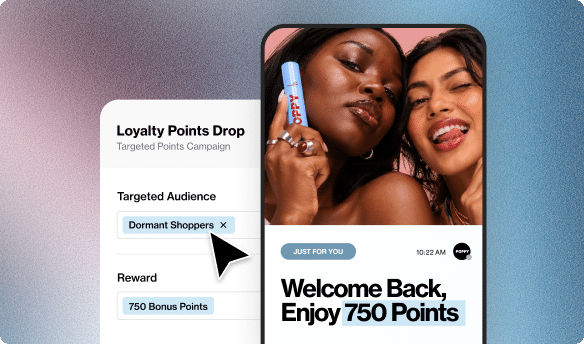
- “Write a review: Earn 50 Points.”
- “Add a Photo: Earn 100 Points.”
- “Add a Video: Earn 150 Points.”
This strategy achieves three goals:
- Compliance: It is a standard rewards program structure.
- Quality: It incentivizes higher-effort content (photos/videos).
- Retention: The customer now has a balance of points, which psychologically commits them to returning to your store to “spend” them.
Advanced Strategy – Beyond the Star Rating
Once the automation engine is running, you can leverage advanced tactics to turn the process to collect product reviews into a source of business intelligence and SEO dominance.
Strategy 7: AI Overviews & Generative Engine Optimization (GEO)
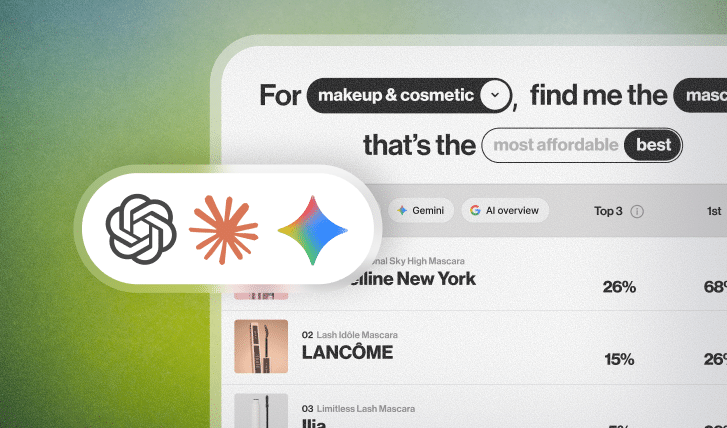
Search has changed. We are moving from the era of “Blue Links” to the era of “AI Answers.” Google’s AI Overviews and other LLMs don’t just scan for keywords; they read for context and consensus.
When you collect product reviews that are detailed and descriptive, you are feeding these AI models the raw data they need to recommend your brand. This is Generative Engine Optimization (GEO).
For example, if a user asks an AI search engine, “What is the best running shoe for wide feet?”, the AI scans thousands of reviews looking for the phrase “wide feet” and positive sentiment. If your reviews consistently mention this specific benefit, the AI is more likely to cite your product as the answer. Therefore, encouraging detailed, long-form reviews is a direct investment in your future organic traffic.
Zero-Party Data Collection (Custom Questions)
A review request is a rare moment where a customer is willing to tell you about themselves. Don’t waste it. Use “Custom Questions” within the review form to gather demographic data that you cannot get from tracking pixels.
- Beauty Brand: Ask “What is your skin type?” (Oily / Dry / Combo).
- Apparel Brand: Ask “What is your usual size?” and “How did this fit?” (Small / True / Large).
- Pet Brand: Ask “What breed is your dog?”
The Payoff: You can now segment your email marketing based on this data. You can sync this “Zero-Party Data” to your email platform (like Klaviyo) and send a campaign specifically to “People with Dry Skin” recommending your new heavy moisturizer. This is the holy grail of personalization—marketing based on explicit facts, not just browsing guesses.
Syndication
Syndication is the process of collecting a review once and making it work harder by displaying it everywhere.
- Google Integration: Ensure your review platform is a Google Partner. This allows your review data to feed into Google Shopping ads (Product Ratings) and organic search results (Rich Snippets). These “Star Ratings” on Google can increase CTR by 17%, significantly lowering your Cost Per Click (CPC).
- Retail Syndication: If you sell at Target, Walmart, or Sephora, you don’t want to start from zero reviews on their websites. Syndication allows you to push your Direct-to-Consumer (DTC) reviews to these retailer product pages, ensuring social proof exists across the entire omnichannel ecosystem.
Selecting the Right Technology Partner
To execute this strategy, you need a “best-in-class” platform. Standard email tools or basic apps lack the logic, syndication, and AI capabilities required for scaling.
When evaluating a platform, prioritize an integrated approach. A solution like Yotpo Reviews is engineered not just to collect product reviews, but to drive growth. It distinguishes itself through:

- Data-Driven Automation: Using machine learning to optimize the timing of requests based on millions of data points.
- Smart Prompts: Replacing generic text boxes with AI-driven questions that are 4x more likely to capture high-value topics (fit, fabric, usage).
- Synergy: Native integration with Yotpo Loyalty, allowing you to deploy the “Points for Reviews” strategy with a single click.
- Google Partnership: As a premier partner, it ensures your reviews actually count towards your Google Seller Ratings and Shopping Ads.
Managing the Feedback Loop (Crisis Management)
The final piece of the automation puzzle is how you handle the output—specifically, the negative output.
The Service Recovery Paradox There is a fascinating phenomenon in customer service called the Service Recovery Paradox. It states that a customer who has a problem that is successfully and impressively resolved by the company often becomes more loyal than a customer who never had a problem at all.
When a 1-star review comes in, your automated system should:
- Alert: Auto-flag the review to your support team (e.g., via Slack or Zendesk integration).
- Public Reply: Respond publicly. “I’m so sorry to hear this. This isn’t our standard.” This is not just for the angry customer; it is for the benefit of future shoppers, showing them you are responsive and reasonable.
- Private Resolution: Contact the customer immediately. Offer a replacement or refund.
- The Ask: Once resolved, ask if they would be willing to update their review. Many platforms allow customers to edit their past feedback.
Turning a 1-star rant into a 5-star rave regarding your customer service is one of the most powerful conversion drivers available.
Conclusion
The era of “set it and forget it” e-commerce is over. The brands that win in 2026 are those that treat their customers as partners, not just transactions. By automating how you collect product reviews, you are doing more than just saving time. You are building a self-sustaining asset.
Every sale generates a request; every request generates a review; every review builds trust; every ounce of trust generates higher conversion rates; higher conversion rates generate more sales.
This is the review flywheel. It turns your customer base into your marketing team, your content creators, and your product consultants. With the right timing, the right incentives, and the right platform, this engine will run forever, fueling your growth one star at a time.
FAQs: Best Strategies to Collect Product Reviews
Why is it crucial to collect product reviews for sales?
Reviews act as digital social proof, bridging the gap between the online and offline experience. Since customers cannot touch or test products online, they rely on the feedback of others to verify quality and fit. Data shows that shoppers who see reviews/UGC are 161% more likely to convert than those who don’t.
What is the best way to ask for a review?
The most effective method is using an automated email or SMS (via integration) triggered by the delivery of the product. The request should be personalized, mobile-friendly, and ideally utilize “in-mail” technology that allows the customer to submit the review directly within the email body.
Should I offer rewards for product reviews?
Yes, incentivizing reviews is a proven way to increase submission rates. However, you must follow FTC guidelines: you cannot condition the reward on a positive rating (it must be for any review), and the review must be disclosed as incentivized. Using loyalty points instead of cash is a best practice for driving retention.
How do I handle negative product reviews?
Treat negative reviews as a customer service opportunity. Respond publicly to show you care, apologize for the issue, and offer to resolve it offline. A professional response can actually build more trust with future shoppers than a page full of perfect 5-star ratings.
What is the difference between a product review and a site review?
A product review provides feedback on a specific item (e.g., “The fabric is soft”), which helps sell that particular product. A site review (or service review) covers the overall shopping experience (e.g., “Shipping was fast,” “Customer service was rude”), which impacts your brand reputation and Google Seller Ratings.
How can I get more photo and video reviews?
You need to ask for them explicitly and offer a higher incentive. For example, offer 50 points for a text review, but 100 points for a photo and 150 points for a video. Visual UGC is high-effort for the customer, so the reward must match the effort.
How long after a purchase should I ask for a review?
It depends on the product category. Always trigger based on delivery, not purchase. For apparel, ask 3-5 days after delivery. For skincare or supplements that take time to work, wait 21-30 days. For electronics, wait 7-14 days to allow for setup and usage.
Can product reviews help my website’s SEO?
Yes, significantly. When you collect product reviews, you generate a constant stream of fresh, keyword-rich user-generated content, which search engines love. Additionally, using a platform that supports Rich Snippets allows star ratings to appear in Google search results, improving your visibility and click-through rates.
What is review syndication?
Review syndication is the practice of sharing your reviews across different websites. For example, if you sell your products on Walmart.com or Target.com, syndication allows the reviews collected on your own website to also appear on those retailer sites, boosting sales across all channels.
What is “in-mail review collection”?
In-mail review collection uses AMP (Accelerated Mobile Pages) technology to embed the review form (star rating, text box, photo upload) directly inside the email. This removes the friction of clicking a link and logging in, often resulting in significantly higher review submission rates.
How does “Review Recency” impact consumer psychology compared to total review count?
While total review count provides “social proof of popularity” (e.g., 5,000 people bought this), recency provides “social proof of relevance.” A product with 5,000 reviews but none in the last 6 months signals a “dead” or abandoned product. Psychologically, consumers fear that manufacturing standards may have dropped. A smaller number of reviews (e.g., 50) that are all from the last 30 days is often more powerful for conversion than 1,000 reviews from 2022.
How can reviews be used to reduce return rates?
Reviews are a rich source of fit and expectation data. By analyzing negative reviews (e.g., “This runs small”), you can add “Size Up” badges to your product page. Furthermore, allowing customers to filter reviews by their own body type (e.g., “Show me reviews from people who are 5’4″ and 140lbs”) helps shoppers choose the correct size initially, directly lowering your return rate and associated logistics costs.
What is the role of AI in modern review management?
AI is shifting review management from reactive to proactive. Beyond just generating “Smart Prompts” to help users write better reviews, AI can now analyze thousands of reviews to detect sentiment trends (e.g., “The zipper breaks”). This turns the review section into an automated R&D department, flagging product defects to your manufacturing team before they become a massive recall issue.
Why is Zero-Party Data collected via reviews more valuable than Third-Party Data?
Third-party data (cookies) is imprecise and disappearing due to privacy laws. Zero-Party Data is data the customer voluntarily gives you. When a customer says “I have dry skin” in a review, that is an explicit fact. This allows for hyper-accurate segmentation (e.g., emailing them about a moisturizer for dry skin) that yields significantly higher ROI than guessing based on browsing behavior.
How does the “Service Recovery Paradox” actually drive revenue?
The Service Recovery Paradox posits that a customer who experiences a failure that is excellently resolved is more loyal than one who faced no failure. This drives revenue by increasing Customer Lifetime Value (LTV). A customer who gets a replacement product and a personal apology feels “special” and cared for, often leading them to become a brand evangelist who refers friends, whereas a standard satisfied customer might just be passive.
What are the specific risks of “Gating” reviews, and why should brands avoid it?
“Gating” is the practice of sending happy customers to public review sites (Google, Yelp) and unhappy customers to a private form. This is explicitly banned by the FTC and platforms like Google. The risks include massive fines, being banned from advertising platforms (Google Merchant Center suspension), and permanent reputational damage if exposed. Transparency is the only sustainable strategy.
How do “Visual Reviews” (Photos/Videos) impact the sales funnel differently than text?
Text appeals to the logical brain (specs, pros/cons). Visuals appeal to the emotional brain and the visual cortex. A video of a product in use answers questions text cannot (e.g., “How loud is this vacuum?”, “How sparkly is this diamond?”). Visual reviews keep users on the page longer (Time on Site) and reduce the “imagination gap,” making the “Add to Cart” decision feel less risky.
Can review automation help with inventory management?
Yes. A sudden spike in reviews mentioning “damaged packaging” or “expired product” can alert operations teams to a warehouse issue or a bad batch of inventory much faster than standard returns data. Real-time sentiment analysis acts as an early warning system for your supply chain, allowing you to pull bad stock before more customers are affected.
How should a brand strategy change for collecting reviews on “High Ticket” vs. “Low Ticket” items?
For low-ticket items (commodity goods), speed and ease are key; keep the form short. For high-ticket items (luxury bags, furniture), the customer expects a “white glove” experience. The review request should be more personal, perhaps sent by a “concierge,” and the incentive should be higher. The delay should also be longer to respect the investment the customer made and the time required to fully appreciate the product.
What is the “Virtuous Cycle” of SEO and Reviews?
Reviews create a flywheel for SEO and GEO. First, they provide fresh content, which signals to Google the page is active. Second, they contribute “long-tail keywords” (e.g., customers using words like “comfy for wide feet” that you didn’t put in the description). This helps you rank for those niche searches. Third, the Star Ratings (Rich Snippets) increase CTR. Higher CTR improves organic ranking, which brings more traffic, which generates more sales and more reviews, restarting the cycle











 Join a free demo, personalized to fit your needs