








In the competitive landscape of ecommerce, brands often prioritize the pursuit of new customers. We meticulously track traffic, clicks, and conversion rates, all centered on acquisition. But what about the customers you already have? Focusing exclusively on new buyers can be an inefficient use of resources. A more strategic and sustainable approach is to focus on Customer Lifetime Value (CLV). Understanding and improving CLV is the key to unlocking profitable, long-term growth.
Key Takeaways
- CLV Defined: Customer Lifetime Value (CLV) is the total net profit a business predicts it will earn from a customer throughout their entire relationship with the brand.
- Strategic Importance: Focusing on CLV shifts your strategy from short-term sales to long-term relationship building, which improves marketing ROI, customer segmentation, and revenue forecasting.
- Core Calculation: You can calculate a simple CLV by multiplying the Customer Value (Average Purchase Value × Purchase Frequency) by the Average Customer Lifespan.
- Growth Levers: Key strategies to boost CLV include implementing a strategic loyalty program, using customer reviews to increase average order value, and delivering exceptional customer service.
- Data is Crucial: The accuracy of your CLV calculation and the success of your growth strategies depend entirely on the quality and reliability of your customer data.
This guide provides a comprehensive overview of CLV calculation, key metrics, and actionable strategies for your ecommerce business.
What is Customer Lifetime Value (CLV) and Why Does It Matter?
Before diving into specific strategies, it’s essential to establish a clear definition of CLV and its strategic importance. Adopting a CLV-focused mindset represents a fundamental shift from short-term transactions to long-term customer relationships.
Defining CLV in the Ecommerce Context
At its core, Customer Lifetime Value is a prediction of the total net profit your business will earn from a single customer over the entire duration of your relationship. This metric extends beyond their first purchase or even their first year. It encompasses the complete value they generate from their initial transaction until they stop being a customer. In essence, it quantifies the financial worth of a customer relationship.
The Strategic Importance of CLV in Ecommerce
Why is this metric so critical? Shifting your focus from customer acquisition to customer retention, guided by CLV, can fundamentally improve your business. This is a move from pursuing immediate sales to cultivating sustainable growth.
Here’s why CLV is strategically vital for any ecommerce brand:
- It refines your marketing budget. When you know how much a customer is worth over their lifetime, you can make more informed decisions about your Customer Acquisition Cost (CAC).
- You can identify your best customers. CLV helps you pinpoint your most profitable audience segment. This allows you to tailor marketing efforts and special offers to keep these VIPs engaged and satisfied.
- It leads to better forecasting. By understanding the long-term value of your customers, you can create more accurate and stable revenue projections. This is crucial for inventory planning and overall business strategy.
- It guides product and service improvements. Analyzing the behavior of high-CLV customers can reveal which products are most popular and what aspects of your customer experience are performing well, providing a clear roadmap for future development.
In short, CLV transforms your business strategy from being purely transactional to relational, focusing on building lasting connections that drive sustainable profit.
How to Calculate Customer Lifetime Value
Calculating CLV can range from simple to complex, but you don’t need to be a data scientist to get a valuable estimate. Let’s break down the most common and effective methods.
Before You Start: Key Metrics You’ll Need
To calculate CLV, you first need to gather a few essential data points from your ecommerce platform.
- Average Purchase Value (APV): The average amount a customer spends in a single transaction.
- Formula: Total Revenue / Total Number of Orders
- Purchase Frequency (PF): How often the average customer makes a purchase from your store in a given period.
- Formula: Total Number of Orders / Total Number of Unique Customers
- Customer Value (CV): The average monetary value of a customer over a specific period (usually a year).
- Formula: Average Purchase Value (APV) × Purchase Frequency (PF)
- Average Customer Lifespan (ACL): The average length of time a customer continues to buy from your brand. For many businesses, a standard estimate of 1-3 years is a practical starting point.
The Simple CLV Formula
For a quick and useful snapshot, the simple CLV formula is an excellent place to start. It provides a solid baseline understanding of your customers’ value without requiring complex calculations.
The formula is straightforward: CLV = Customer Value (CV) × Average Customer Lifespan (ACL)
Let’s walk through an example. Imagine your online store has the following metrics for the past year:
- Average Purchase Value (APV): $75
- Purchase Frequency (PF): 4 (the average customer buys four times a year)
- Average Customer Lifespan (ACL): 3 years
First, calculate the Customer Value (CV): CV = $75 (APV) × 4 (PF) = $300 This means the average customer is worth $300 to your business per year.
Next, calculate the simple CLV: CLV = $300 (CV) × 3 (ACL) = $900 In this example, the average customer is projected to be worth $900 to your business over their entire relationship with your brand.
The Traditional CLV Formula
To get a more granular view that factors in profit margins, the traditional CLV formula is the next logical step. This version provides a clearer picture of profitability, not just revenue.
Here’s the formula:
CLV = (Average Transaction Size × Number of Transactions × Retention Period) × Profit Margin
Let’s use another example:
- Average Transaction Size: $80
- Number of Transactions (per year): 5
- Retention Period (in years): 2
- Profit Margin: 25% (or 0.25)
First, calculate the total revenue per customer over their lifespan:
Total Revenue = $80 × 5 × 2 = $800
Now, apply your profit margin to find the CLV: CLV = $800 × 0.25 = $200
This calculation reveals that the average customer generates $200 in profit for your business. This distinction is crucial, as it helps you understand the true bottom-line impact of each customer relationship.
A Quick Look at Predictive CLV Models
For larger businesses with access to extensive data, predictive CLV models offer the highest degree of accuracy. These models use machine learning and historical transaction data to forecast a customer’s future spending habits. While powerful, they require significant technical expertise to implement. For most ecommerce brands, the simple and traditional formulas provide enough insight to drive meaningful strategic decisions.
Choosing the Right Calculation for Your Business
Which formula should you use?
- If you’re just starting to track CLV, begin with the simple formula. It’s easy to calculate and immediately provides a powerful metric to work with.
- Once you’re comfortable with that, move to the traditional formula to incorporate your profit margins. This will yield a more financially sound number to base your marketing and acquisition budgets on.
The key is to begin. Calculating CLV, even with a simple formula, is a big step toward a more sophisticated and sustainable ecommerce strategy.
Key Strategies to Boost Your Ecommerce CLV
Knowing your CLV is the first step. The real value comes when you use that knowledge to implement strategies that increase it. Improving CLV means encouraging customers to buy more, buy more often, and remain loyal to your brand for longer.
Strategy 1: Build a World-Class Customer Retention Program
The most direct way to increase CLV is to extend the customer lifespan. If customers remain active for longer, they will naturally spend more. This is where a well-designed customer retention program, particularly a loyalty program, becomes invaluable.
Implementing a Strategic Loyalty Program
A loyalty program is a powerful tool for boosting CLV. It builds a stronger connection with your brand by rewarding repeat purchases, which directly encourages behaviors that increase purchase frequency and average order value.
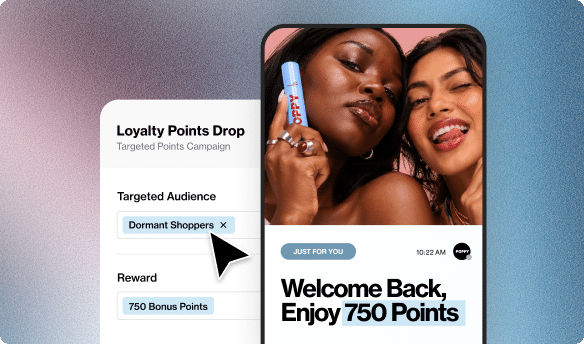
- A dedicated solution like Yotpo Loyalty helps ecommerce brands build highly effective and customized programs. The focus is on a partnership approach to ensure your program is structured for success. Yotpo provides strategic guidance from loyalty experts and dedicated Customer Success Managers to help you design and optimize your program. Its flexibility allows you to create unique experiences with tailored earning rules, rewards, and VIP tiers. The platform also offers access to robust, in-depth analytics so you can track performance and understand its direct impact on CLV.
- Other solutions in the market include Loyalty Lion, Smile, Okendo, Stamped, and Rivo. These platforms offer various features for creating loyalty programs, such as points-based systems and referral capabilities. When evaluating options, consider the level of strategic support and customization available to ensure the program aligns with your specific business goals.

Strategy 2: Increase Average Order Value (AOV)
Another key lever for boosting CLV is encouraging customers to spend more on each transaction. If you can increase your AOV, your CLV will rise accordingly, even if purchase frequency and lifespan remain the same.
Leveraging Social Proof with Customer Reviews Building shopper confidence at the point of purchase is an effective way to increase AOV. Social proof, particularly in the form of customer reviews and user-generated content (UGC), is a powerful tool for reducing purchase anxiety and validating a customer’s buying decision. When shoppers trust a product, they are more likely to complete the purchase and add more items to their cart.
- A dedicated reviews solution like Yotpo Reviews helps brands turn customer feedback into conversion-driving assets. It provides tools to collect valuable reviews that include customer photos and videos, offering authentic social proof that boosts shopper confidence. Yotpo enables you to strategically display this content across your website using customizable widgets, such as on-site galleries and review carousels. Brands can also extend the reach of their reviews by syndicating them to key third-party platforms like Google Shopping.

- Alternative reviews solutions include Okendo, Bazaarvoice, Klaviyo Reviews, Reviews.io, and Stamped.io. These platforms provide functionality for collecting and displaying customer reviews to build social proof on product pages.
Strategic Upselling and Cross-selling Beyond reviews, classic tactics like upselling and cross-selling are proven ways to increase AOV.
- Upselling: Encourage customers to purchase a more premium version of a product.
- Cross-selling: Recommend complementary products that enhance the original item.
Implement these tactics thoughtfully on product pages and during checkout to increase AOV without being intrusive.
Strategy 3: Deliver Exceptional Customer Service
Finally, never underestimate the power of outstanding customer service. Every interaction a customer has with your brand—from browsing your site to receiving their package to contacting support—contributes to their overall experience. A positive experience builds trust and loyalty, while a negative one can send them directly to your competitors.
Here are a few ways to ensure your service is a CLV booster:
- Offer Hassle-Free Returns: A clear and easy return policy removes risk and builds confidence.
- Be Responsive: Provide quick and helpful support across multiple channels.
- Communicate Proactively: Keep customers informed about their order status or potential delays.
Exceptional service turns customers into advocates, and advocates have the highest CLV of all.
The Challenges and Limitations of Using CLV
While CLV is a powerful metric, it’s important to use it with an awareness of its potential challenges and limitations.
The Pitfall of Inaccurate Data
The reliability of your CLV calculation depends entirely on the quality of your input data. If the data you’re using is incomplete or inaccurate, your CLV figure will be misleading. Common issues include duplicate customer records, inconsistent tracking across devices, or failing to properly account for returns. Ensuring your data is clean and reliable is the essential first step to getting a meaningful CLV.
CLV is a Prediction, Not a Guarantee
It’s crucial to remember that Customer Lifetime Value is a forecast based on past actions. Future behavior is not guaranteed. Market conditions can change, new competitors can emerge, and customer preferences can evolve. Your CLV is a dynamic metric that should be recalculated and re-evaluated regularly, not treated as a static number.
Balancing CLV with Customer Acquisition
A strong focus on CLV and retention is a sound strategy, but it should not come at the complete expense of customer acquisition. A healthy business needs both. You need a steady stream of new customers to fuel growth, and you must maximize the value of those customers once they are in your ecosystem. The goal isn’t to stop acquiring customers; it’s to acquire the right customers—those with a high potential to become loyal, high-CLV advocates for your brand.
By understanding these limitations, you can use CLV as a strategic guide rather than an infallible rule, making smarter decisions for the long-term health of your business.
Conclusion: Putting CLV at the Heart of Your Ecommerce Strategy
Transitioning from a purely acquisition-focused mindset to one centered on Customer Lifetime Value is one of the most important strategic shifts an ecommerce business can make. CLV is more than a metric. It’s a philosophy that prioritizes building genuine, lasting relationships with the people who buy your products.
By calculating your CLV, you gain a deep understanding of what your customers are truly worth. By implementing targeted strategies to improve it—through loyalty programs, authentic social proof, and exceptional service—you build a more resilient, profitable, and sustainable business. Start by focusing on the customers you already have. You’ll find it’s the most powerful engine for growth you’ve ever had.
Frequently Asked Questions
What is a good CLV for an ecommerce business?
There is no universal “good” CLV, as it varies dramatically by industry, product type, and price point. A business selling high-end furniture will naturally have a higher CLV than one selling coffee. The most important practice is to establish a benchmark for your own business and focus on improving it over time. A helpful approach is to compare your CLV to your Customer Acquisition Cost (CAC). A healthy ratio is typically 3:1 or higher, meaning your customer’s lifetime value is at least three times the cost of acquiring them.
How often should I calculate CLV?
For most ecommerce businesses, calculating CLV quarterly or semi-annually is a good cadence. This lets you track trends and see how your marketing and retention efforts are impacting the metric over time. If your business is highly seasonal or you’re running major campaigns, you might want to calculate it more frequently to get a clearer picture of their immediate impact.
Can CLV be negative?
Yes, it is possible for an individual customer to have a negative CLV. This means the cost to acquire and serve that customer exceeded the revenue they generated. This can happen with customers who make a single small purchase, return it, and require extensive customer support, all after being acquired through an expensive ad channel. Identifying segments with low or negative CLV can help you refine your marketing to avoid attracting unprofitable customers.
What’s the difference between CLV and Customer Acquisition Cost (CAC)?
CLV and CAC are two sides of a critical ratio for business health. CAC is the total cost of sales and marketing to acquire a new customer. It’s a retrospective metric, showing how much you spent. CLV is the total predicted profit from a customer over their entire relationship with your brand. It’s a forward-looking metric that estimates future value. A sustainable business model requires your CLV to be significantly higher than your CAC.
Which is more important: CLV or conversion rate?
Both are important, but they measure different things. Conversion rate measures the effectiveness of your website and marketing at turning a visitor into a customer for a single session. CLV measures the long-term value of that customer relationship. A high conversion rate is great, but if those customers never return, your business may struggle. A focus on CLV encourages you to attract and retain customers who bring sustained value.
How can I segment customers based on CLV?
Once you calculate CLV for your customers, you can group them into segments. Common segments include high-value (your VIPs), mid-value (potential to become VIPs), and low-value (at-risk or low-spending) customers. This allows you to tailor your marketing. For example, you can offer exclusive perks to your VIPs and run re-engagement campaigns for your at-risk segment.
Does a subscription model automatically increase CLV?
A subscription model can be a powerful driver of a higher CLV because it builds repeat purchases directly into the business model. It increases purchase frequency and customer lifespan by design. However, it’s not automatic. You still need to provide excellent products and a great customer experience to prevent churn and keep subscribers happy long-term.
How do returns and refunds affect CLV?
Returns and refunds directly reduce a customer’s lifetime value because they subtract from the total revenue that customer has generated. When you calculate CLV, it’s important to use net revenue (total revenue minus refunds) to get an accurate picture. A high return rate in a specific customer segment can be a red flag that there’s an issue with a product or a mismatch in customer expectations.
What is the simplest way to increase Purchase Frequency?
One of the simplest ways is through strategic post-purchase communication. A thank-you email that suggests complementary products, a follow-up asking for a review (which brings them back to your site), or a reminder about an upcoming sale can all encourage that next purchase and keep your brand top-of-mind.
Can I calculate CLV for a brand new business?
Calculating CLV for a new business is challenging because you lack historical data. In this case, you can start with industry benchmarks for average purchase frequency and customer lifespan. As your business operates and gathers its own data over the first year, you can replace those estimates with your actual metrics to get a much more accurate CLV.
How does CLV relate to customer loyalty?
CLV and customer loyalty are very closely linked. A loyal customer is someone who trusts your brand, purchases from you repeatedly, and is less likely to switch to a competitor. These are exactly the behaviors that lead to a high CLV. Therefore, any initiative that builds customer loyalty, like a great rewards program or excellent service, will almost always increase CLV.
What role does Average Order Value (AOV) play in CLV?
Average Order Value (AOV) is a direct component of the CLV calculation. If you can increase the amount customers spend per transaction, your CLV will increase, assuming their purchase frequency and lifespan stay the same. Tactics like product bundling, free shipping thresholds, and cross-selling are all designed to boost AOV and, in turn, CLV.
Is it better to focus on improving CLV or lowering CAC?
A healthy business does both, but many argue that focusing on CLV yields better long-term results. Improving CLV means you are creating a better customer experience and building stronger relationships, which creates a more sustainable business. While lowering CAC is important for efficiency, acquiring a lot of low-value customers may not be as profitable in the long run as retaining a smaller group of high-value customers.











 Join a free demo, personalized to fit your needs